Heatwave Derailments Disrupt UK Railways
Two recent train derailments in southern England, during an exceptionally hot summer, have highlighted the vulnerability of Britain's rail infrastructure
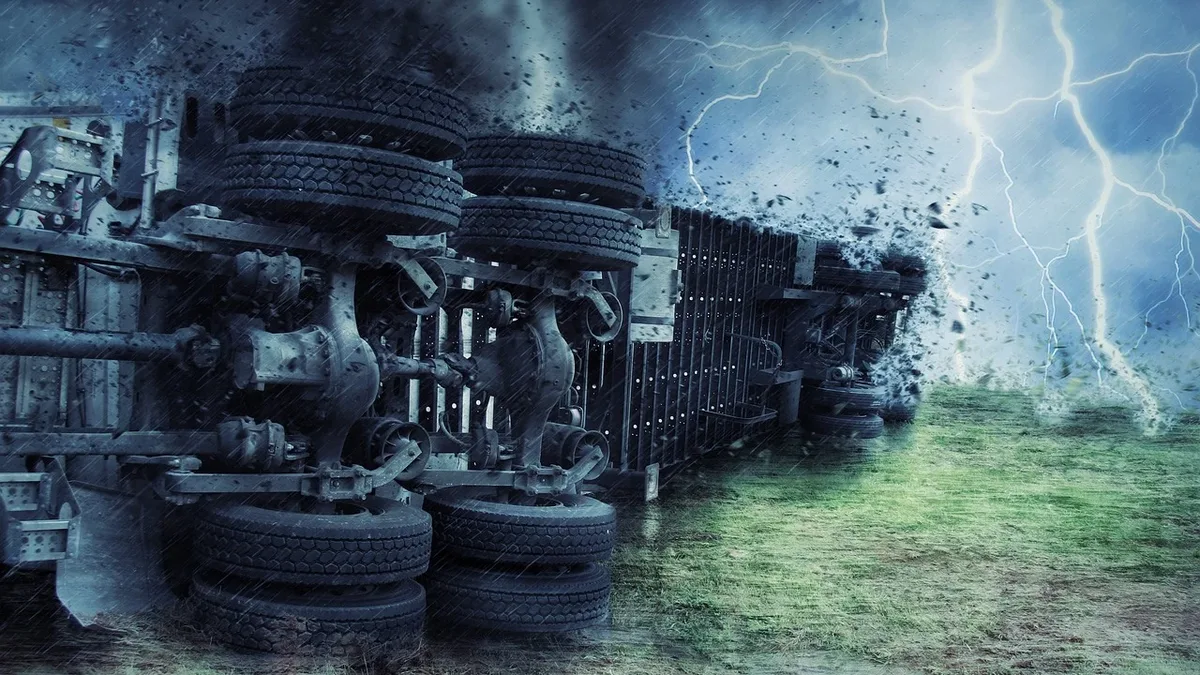
Two train derailments in southern England this summer, one injuring 30 people, have occurred during one of the hottest and driest summers on record. Network Rail stated the summer has 'presented exceptional challenges to the railway', which was built for a cooler, wetter climate.
Steel railway tracks expand when they get hot. William Powrie, a professor of geotechnical engineering at the University of Southampton, explained that this can generate compressive stresses, leading the track to buckle. In 2022, just two days of record heat led to almost 7,700 cancelled trains and an estimated £30m in costs.
Rails can get much hotter than the air. Network Rail says most of the network can operate when track temperatures reach 46C, roughly equivalent to an air temperature of 30C. However, rails have been recorded at 51C.
Foundations Weaken in Drought
The problem is compounded by the soil beneath the tracks. Manu Sasidharan, an assistant professor at University College London, said the soil is 'essentially the foundation' and can shrink when dried out by prolonged heat and drought. The weight of passing trains then puts pressure on this weakened soil, causing it to settle unevenly and distorting the track above.
Some of the network's embankments and structures date to the 1800s. The recent derailment near Lewes, East Sussex, occurred on an embankment built on clay, which the Rail Accident Investigation Branch (RAIB) said is 'sensitive to variations in water content'.
Engineering for a Hotter Climate
Engineers use a technique called pre-stressing to combat buckling, laying rails slightly stretched. In the UK, rails are stretched so they do not undergo compression until the air temperature passes 27C. This figure is a compromise, protecting against summer buckling and winter breaks from tension.
Other countries set this 'stress-free' temperature higher. In parts of Australia, the US, and southern Europe, it can exceed 35C, as there is less risk of rails snapping in cold winters.
| Region/Country | Typical Stress-Free Air Temperature | Key Climate Reason |
|---|---|---|
| United Kingdom | 27°C | Compromise for wide seasonal temperature range |
| Parts of Australia & USA | Exceeds 35°C | Higher baseline heat, less severe cold |
| Southern Europe (e.g., Italy) | Designed for more heat | Winters rarely as cold as UK |
A post-2022 Network Rail taskforce suggested the stress-free temperature on modern track could be raised from 27C to 30C. William Powrie noted one could have different standards for southern England compared to northern Scotland. However, a higher setting makes rails more vulnerable in a cold snap.
Simpler measures are already in use. Painting sections of track white can reduce the rail temperature by 5-10C, according to Network Rail.
Investigation and Response
The cause of the Lewes derailment is not yet confirmed. An interim RAIB report found a 'track geometry irregularity' existed beforehand and cited passenger reports of rough riding. Manu Sasidharan said early evidence pointed to a 'track infrastructure fault, most likely'.
William Powrie described the Lewes site as a potential 'Swiss cheese' model accident, where several small failures lined up. The derailment happened on a bend, near where the track leaves a bridge and moves onto a clay embankment, a transition point that is a natural weak spot when the ground dries out.
As a temporary measure following the Wickford derailment, speed restrictions were imposed on trains in southern Essex. Network Rail says it is cooperating fully with the RAIB investigation, awaiting its conclusions before implementing any lessons.