Chimpanzees throw rocks at trees for years
Wild western chimpanzees in Guinea-Bissau have been repeatedly throwing rocks at specific trees for more than ten years, a rare cultural behavior.
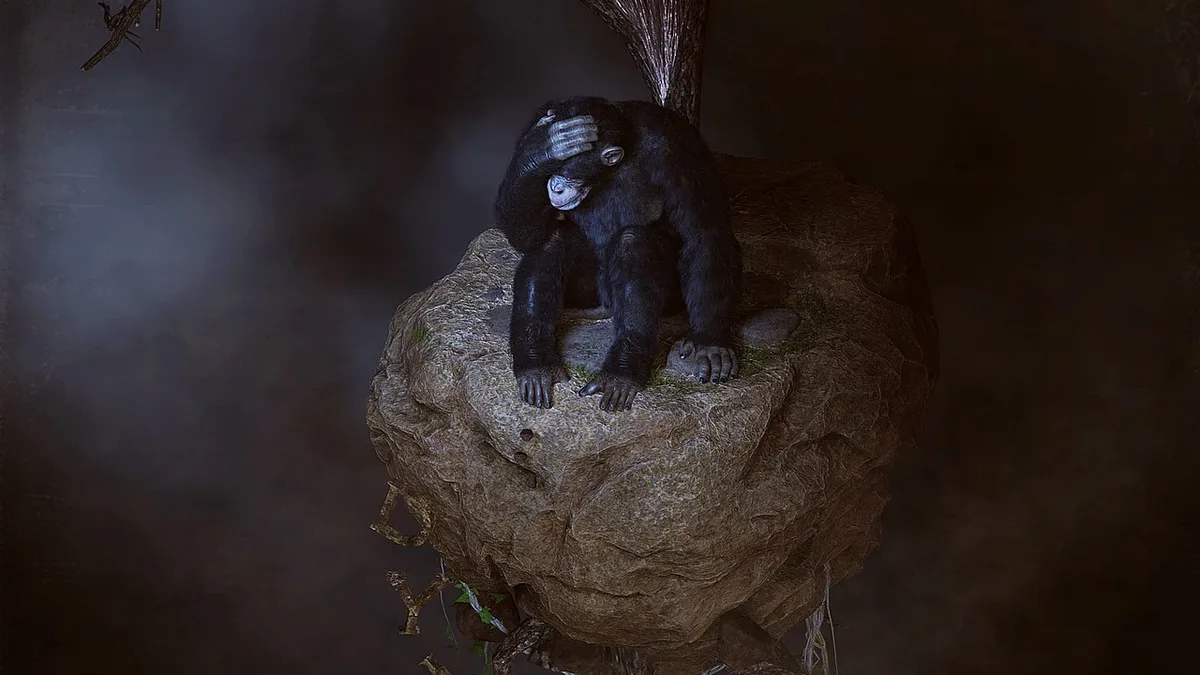
Wild western chimpanzees in Guinea-Bissau have been repeatedly throwing rocks at specific trees for over a decade. Researchers from The Conversation report this unusual behavior, observed in only four groups in West Africa, may be cultural and serve as communication or territorial signaling.
Video recordings show the chimpanzees, usually adult males, performing the act. They throw rocks at particular trees, creating piles of stones at the base. While throwing, the animals often pant hoot, a loud long-distance call, and sometimes engage in buttress drumming by hitting the tree with their hands and feet.
A cultural and communicative act
Pant hooting and drumming are part of male chimpanzee displays, suggesting stone throwing is a modification of this common behavior. The researchers state it is likely a cultural behavior due to its limited geographic distribution. The availability of rocks and suitable trees does not guarantee a throwing site will exist.
Previous research indicates the sites may mark important locations within the territory. The behavior is a rare example of stone tool use in a social context, unlike using stones to crack nuts for food. The exact meaning to the chimpanzees themselves remains unknown.
Research in a remote landscape
The research team based themselves in the village of Béli within Boé National Park. From there, they traveled 22 kilometers into the savanna-woodland to establish a bush camp. The local chimpanzees are unhabituated and flee from humans, so direct observation is impossible.
Instead, the scientists collected data using camera traps and audio recording devices. They set up two video cameras at each accumulative stone throwing site. Recording devices were placed strategically to capture audio from the surrounding area.
The campsite was near the Fefine river, a crucial water source in the dry landscape. Cameras near the riverbank captured images of various wildlife neighbors.
Documenting a lasting tradition
A typical research day began around 6:30 a.m. The team would visit a set of two to five sites to maintain equipment. They replaced SD cards and batteries, ensured devices functioned, and collected additional data. This included tree measurements and 3D scans of the thrown rocks for later analysis.
They also recorded observations of chimpanzee nests, feeding signs, vocalizations, and any sightings. The collected video and audio will help determine the age and sex of the stone throwers and any nearby reacting chimpanzees.
The team confirmed that most sites first identified years earlier and revisited in 2017 were still active. This proves chimpanzees can use these specific sites for over a decade.
Facing the threat of mining
As many primates face human threats, cultural behaviors can aid adaptation and support conservation arguments. The researchers emphasize that accumulative stone throwing constitutes durable primate material culture. Its loss would erase part of primate heritage.
Chimpanzee habitat in Guinea-Bissau is threatened by extractive industries, particularly mining. While in the field, the team encountered bore holes from bauxite mining exploration.
Bauxite mining offers economic opportunity for Guinea-Bissau but risks habitat destruction and pollution. These effects have been severe for wildlife and people in neighboring Guinea. The researchers note the need for strong environmental oversight, especially given the country's challenges with unstable governance.
By studying behaviors like this, the team hopes to support chimpanzee conservation and broader biodiversity preservation. They also aim to protect primate cultural materials for future research and education.