Tiny Fossils Hold Clues to Complex Life's Origins
Scientists search for 1.7-billion-year-old fossils to understand the emergence of complex life on Earth and its potential elsewhere in the universe.
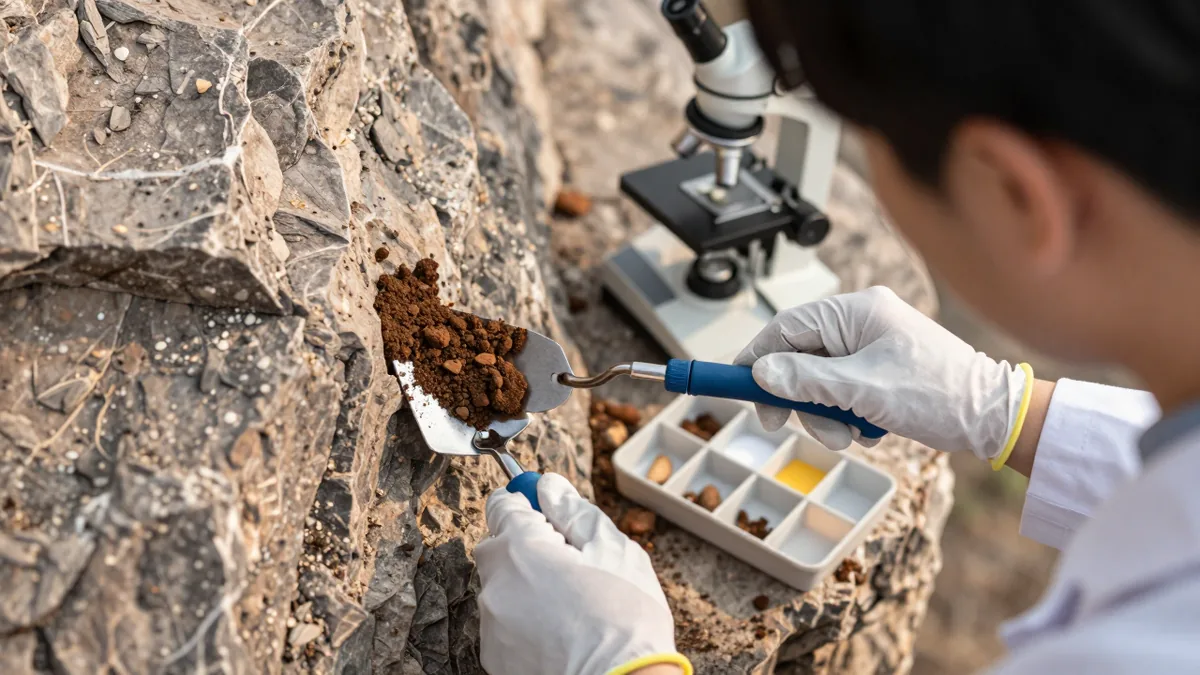
The search for life beyond Earth often captures the spotlight, but another significant astrobiology mystery is closer to home. Scientists are trying to understand when the first eukaryotes appeared on Earth and how they contributed to the development of complex life.
Life on Earth dates back over 3.5 billion years, with cyanobacteria and oxygen-producing photosynthesis present by at least 2.3 billion years ago. Eukaryotes, which are characterized by cells containing a nucleus and organelles, emerged by at least 1.7 billion years ago.
## The Importance of Eukaryotes
Eukaryotic cells are distinct from prokaryotic cells, which lack a nucleus and organelles. Eukaryotes played a crucial role in the emergence of complex life on Earth, and their study can provide insights into the origins of life elsewhere in the universe.
## The Challenges of Finding Ancient Fossils
Finding eukaryotic microfossils is an enormous challenge due to their microscopic size, lack of protective hard tissues, and exposure to billions of years of geological degradation. The fossil record from this period remains poorly sampled, making it difficult for researchers to reconstruct the history of Earth's earliest life.
## Searching for Ancient Life
Scientists are searching for ancient fossils in places where delicate biological material had an unusual chance of surviving. They are particularly interested in areas with abundant nutrients and organic material, such as ancient coastal environments. Researchers are also targeting pristine locations or regions that have received relatively little scientific sampling.
## The Implications for Astrobiology
Understanding how life emerged and became increasingly complex on Earth is an important part of astrobiology. By learning which environments preserve ancient organisms on Earth, scientists may become better equipped to recognize possible signs of life elsewhere. The search for life on other planets is closely tied to understanding the origins of life on Earth.
## Searching for Ancient Fossils in Norway and Australia
Researchers are searching for ancient fossils in a roughly 100sq. km region near Svalbard, Norway, and in Australia, where they have discovered some of the oldest known eukaryotic microfossils, dating to roughly 1.75 billion years ago. Ancient coastal environments are particularly promising places to search for eukaryotic microfossils.
| Location | Age | Description | | --- | --- | --- | | Svalbard, Norway | 1.7 billion years | Ancient coastal environment | | Australia | 1.75 billion years | Eukaryotic microfossils discovered | | Earth's early history | 3.5 billion years | Emergence of life |
| Location | Description | | --- | --- | | Svalbard, Norway | Remote island area with a shallow sea | | Australia | Produced important evidence of ancient eukaryotic microfossils | | Deserts or Arctic landscapes | Ideal locations for searching for ancient fossils |
| Location | Description | | --- | --- | | Svalbard, Norway | Exposed ancient rocks | | Australia | Produced important evidence of ancient eukaryotic microfossils | | Deserts or Arctic landscapes | Ideal locations for searching for ancient fossils |