Conservation Efforts Along Colombia's Pacific Coast Protect Migratory Birds and Communities
A biologist with Asociación Calidris shares her work in protecting mangrove forests and migratory birds along Colombia's Pacific coast.
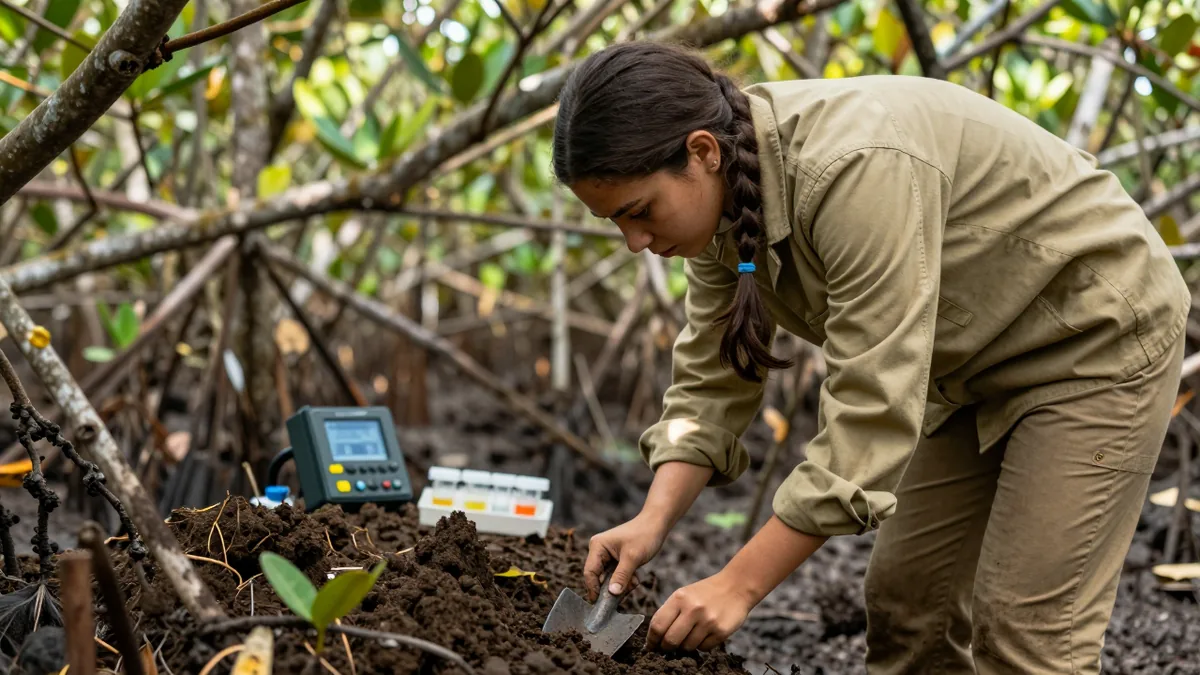
Colombia's Pacific coast is home to some of the most biodiverse mangrove forests in the world. These forests, which stretch along the southern part of the country, are not only crucial for the survival of migratory birds but also provide a livelihood for local communities. Diana Eusse, a biologist with Asociación Calidris, has been working to protect these forests and the birds that depend on them for over 35 years. As part of the Migratory Shorebird Project, Eusse and her team have been tracking and conserving shorebirds along the Pacific coast, with a focus on the mangrove forests and intertidal flats. One of the key sites for conservation efforts is the Iscuandé River Delta, a collective territory of communities with some of the best-preserved mangrove forests in South America. The Esfuerzo Pescador Community Council has been working tirelessly to protect the mangroves and the mudflats that sustain the community and shorebirds. Eusse's work has also focused on strengthening governance and the participation of local communities as stewards of nature. Through leadership training, improvements to the local economy, communication initiatives, and the social appropriation of knowledge, Calidris has contributed to the conservation of these territories. The Colombian Pacific coast is home to a diverse range of communities, including Afro-Colombian and Indigenous communities. Eusse notes that the Colombian Constitution has granted Indigenous communities the autonomous management of their collective territories, making this commitment to governance and self-determination particularly relevant in these territories. Eusse's passion for flyway conservation is evident in her work, and she has a clear favourite species: the Whimbrel. Its presence is very noticeable, due to its song, the shape of its beak, and its size. The Whimbrel is also an important indicator species, as its return to the mangroves signals the start of the breeding season. Eusse's work has not been without its challenges. The mangroves of the Colombian Pacific are among the best preserved in the hemisphere, but the region also faces significant development and infrastructure challenges. Healthcare, education, and infrastructure are minimal in this region, making it difficult for local communities to protect their natural resources. Despite these challenges, Eusse remains optimistic about the potential for conservation efforts to make a positive impact. Through her work with Asociación Calidris and the Migratory Shorebird Project, Eusse has been able to connect with local communities and build partnerships that extend far beyond nature conservation. As Eusse notes, 'Bird migration is remarkable. Some of these birds are small, only 10 grams or so, but travel tens of thousands of kilometres from the Arctic in the United States and Canada all the way to Patagonia in Argentina and Chile.' By working together to protect these migrations, Eusse believes that we can do a great deal to protect these incredible journeys. Ultimately, Eusse's work is a testament to the power of conservation efforts to make a positive impact on both people and the planet. By protecting the mangrove forests and migratory birds of the Colombian Pacific coast, Eusse and her team are not only preserving biodiversity but also supporting the livelihoods of local communities.