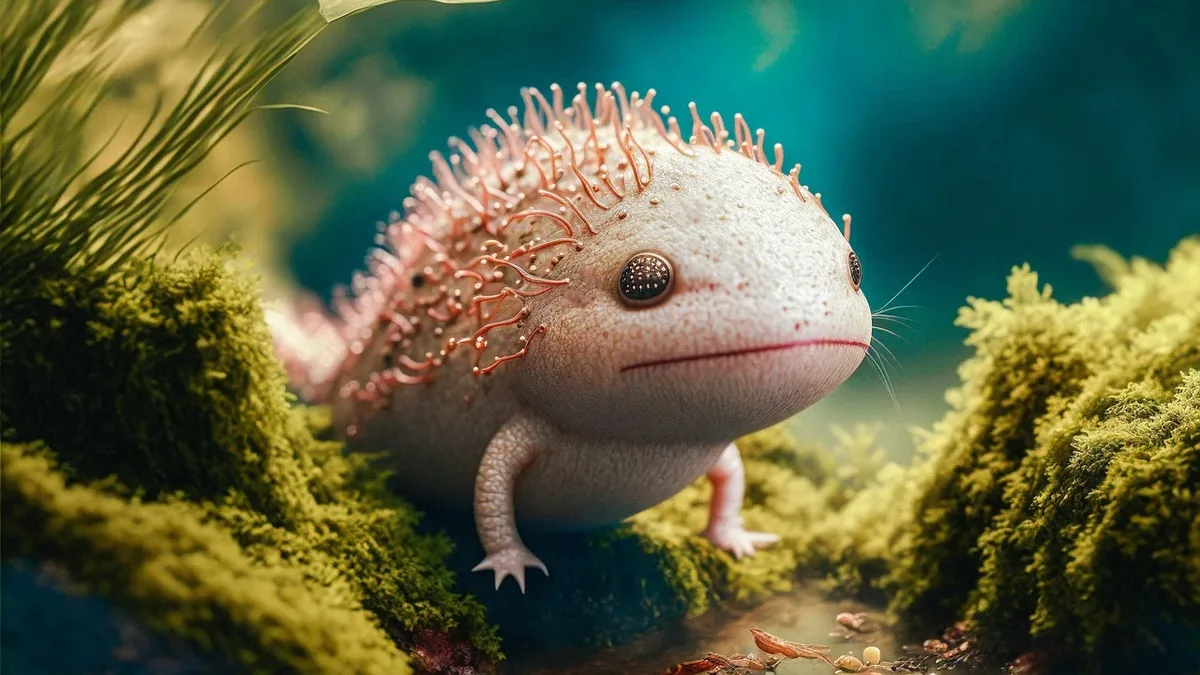
Amphibians
| Scientific name | Varies by species |
|---|---|
| Conservation status | Varies by species (e.g., Least Concern, Endangered) |
| Native range | Varies by continent and region |
| Habitat | Varies (e.g., tropical rainforest, temperate pond, subterranean) |
| Size | Varies from under 1 cm to over 30 cm in length |
| Primary diet | Insectivore (most common) |
| Activity pattern | Varies (Nocturnal, Diurnal, or Crepuscular) |
| Identifying features | Varies (e.g., skin texture, coloration, pupil shape) |
Origin and history
Amphibians are an ancient class of vertebrates whose origins trace back to the Devonian period, over 370 million years ago. They evolved from lobe-finned fish and were the first vertebrate group to make a significant transition from aquatic to terrestrial habitats. The earliest known amphibians, such as Ichthyostega, possessed limbs and lungs but retained aquatic larval stages and fish-like tails. Their evolution and diversification during the Carboniferous period led to a dominance of early forms, some reaching very large sizes. Modern amphibian orders, Anura (frogs and toads), Caudata (salamanders and newts), and Gymnophiona (caecilians), emerged during the Mesozoic era. The group's deep evolutionary history is foundational to understanding vertebrate adaptation to land.
What it was bred for
Amphibians, as a wild class of animals, were not bred for a specific human purpose through artificial selection. Their evolutionary adaptations were shaped by natural selection for survival in specific ecological niches. Certain physiological traits, like permeable skin and a biphasic life cycle, evolved to exploit both aquatic and terrestrial resources. Some species have been subsequently utilized by humans for purposes such as insect population control in agriculture. A limited number of species, like the African clawed frog, have been bred extensively for scientific research, particularly in developmental biology and genetics. Historically, some cultures have bred large anurans for food, but this is not the defining reason for the group's existence.
Life cycle
The classic amphibian life cycle is complex and involves metamorphosis, typically from an aquatic larval stage to a terrestrial or semi-aquatic adult. Most species lay unshelled eggs in water or moist environments, which hatch into larvae, such as tadpoles in anurans, which possess gills for underwater respiration. This larval stage is primarily focused on growth and development before undergoing a radical physiological transformation. Metamorphosis involves the development of lungs, the absorption of the tail in anurans, and the restructuring of the digestive tract for an adult diet. Some species, like many salamanders, exhibit paedomorphosis, retaining larval features like gills into sexual maturity. Certain tropical frogs bypass the free-living larval stage entirely, with direct development from egg to miniature adult.
Character and appearance
Amphibians exhibit immense morphological diversity, but share common characteristics including moist, permeable skin without scales, feathers, or hair. Their skin contains numerous glands and is often involved in respiration, water absorption, and defense through toxins. Anurans are characterized by a tailless adult body, long hind limbs adapted for jumping or swimming, and large eyes. Caudata possess elongated bodies with tails and typically four limbs of similar size, resembling lizards but with moist skin. Gymnophiona are limbless, worm-like, and fossorial, with reduced eyes often covered by skin or bone. Coloration varies widely, from cryptic browns and greens for camouflage to brilliant aposematic colors warning of potent skin toxins.
Overview
Amphibians are ectothermic vertebrates occupying a critical position in many ecosystems as both predators and prey. They are found on every continent except Antarctica, with the greatest biodiversity in tropical rainforests. Their population health is widely considered a key bioindicator due to their permeable skin and complex life cycles, which make them sensitive to environmental changes like pollution, habitat loss, and climate change. Global amphibian populations are experiencing severe declines, with numerous species classified as threatened or endangered. They play vital roles in food webs, controlling insect populations and serving as a food source for larger animals. Conservation efforts are urgently focused on habitat protection, disease mitigation, and captive breeding programs.
What to know
Observing amphibians in the wild requires understanding their specific habitat needs and behavioral patterns. Most species are secretive, nocturnal, and associated with moisture, so searches are most productive near ponds, streams, wetlands, or in damp forest litter after rain or at night. Handling should be minimized; dry hands, chemicals like sunscreen or insect repellent, and the heat from skin can harm their delicate epidermis. Many species have specific breeding seasons, often in spring, when vocalizations (in anurans) or migration to breeding ponds make them more detectable. Legal protections vary; always check local regulations before disturbing animals or their habitats. Field guides and call identification apps are essential tools for proper species identification and respectful observation.
Common questions
A frequent question is whether all amphibians are poisonous, to which the answer is no; only a subset possess skin toxins, and few pose a serious risk to humans without ingestion. People often ask why frog populations seem to be declining, with primary causes being habitat destruction, the chytrid fungus disease, pollution, and climate change. Many inquire if touching a frog or toad causes warts, which is a myth; warts are caused by human viruses, not amphibian skin. A common confusion is the difference between frogs and toads; toads are a type of frog typically characterized by drier, warty skin and more terrestrial habits. People wonder if salamanders are lizards, but they are easily distinguished by their moist, scale-less skin and lack of claws. Observers often ask about noisy nighttime choruses, which are typically male frogs calling to attract mates during the breeding season.
Pros and cons
A significant advantage of amphibians in an ecosystem is their role as a biological control for insects and other invertebrates, reducing pest populations naturally. Their value as bioindicators provides an early warning system for environmental degradation, benefiting broader conservation efforts. For researchers, their often-transparent eggs and external development make them excellent model organisms for embryology and toxicology studies. A major drawback is their high sensitivity, making them difficult to maintain in captivity without precise control of humidity, temperature, and water quality. Many species secrete skin toxins as a defense, which can be hazardous if handled improperly or if pets ingest them. A common mistake by enthusiasts is attempting to keep wild-caught individuals, which often stresses the animal, spreads disease, and fails due to undisclosed dietary and environmental needs, leading to poor welfare and early death.
Who it suits
Amphibians suit dedicated, patient naturalists who prioritize observation over interaction and are committed to non-invasive practices in the field. They are appropriate for experienced, detail-oriented hobbyists who are prepared to invest in specialized terrarium or aquarium setups that replicate specific microhabitats. Conservation biologists and ecological researchers are a natural fit, given the group's importance as indicator species and their critical conservation status. They are generally not suited for casual pet owners, young children seeking a hands-on pet, or anyone unwilling to maintain a consistently moist, clean environment. Educational institutions with robust life science programs can successfully keep certain hardy species, provided care is overseen by knowledgeable staff. Ultimately, amphibians best suit those whose primary interest is in supporting their survival in the wild, whether through study, responsible captive breeding for conservation, or habitat stewardship.