New Amazon Killifish Species Faces Immediate Extinction Threat
Scientists have identified Laimosemion laranja, a tiny orange-patterned killifish in the Brazilian Amazon, but its entire known habitat of just 25 square kilometers is under siege from mining, deforestation, and urban pollution.
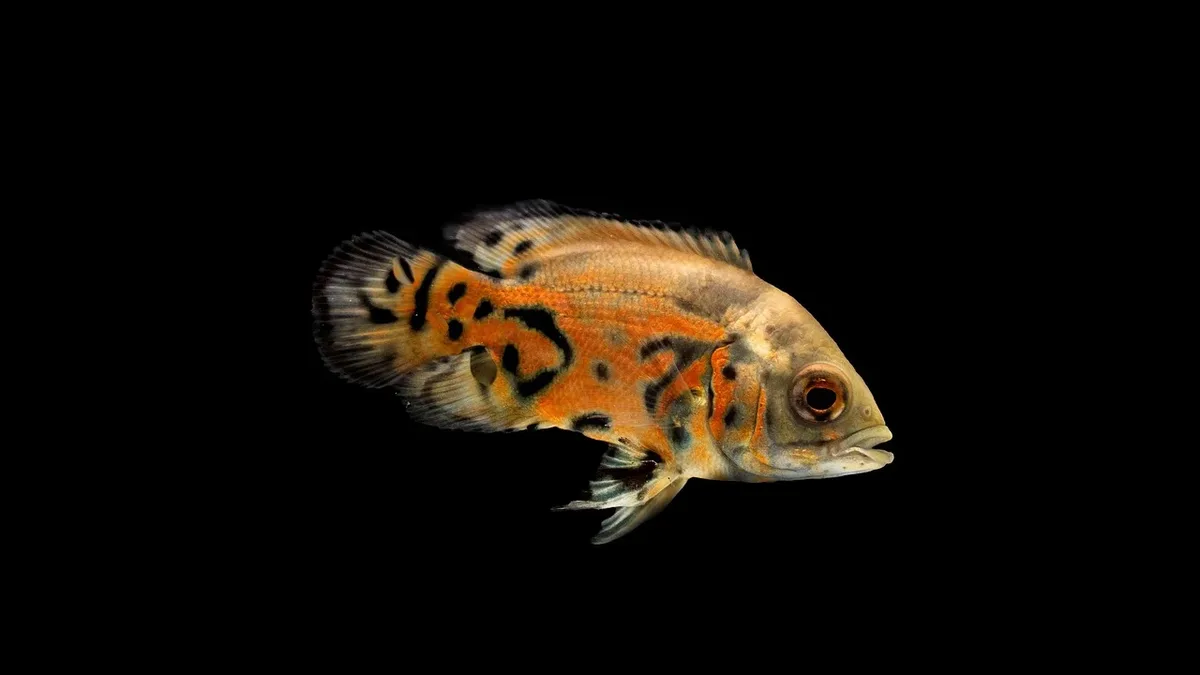
Researchers have discovered a new species of tiny orange-patterned fish named Laimosemion laranja in the Brazilian Amazon. The fish measures less than three centimeters in standard length. Males display rows of bright orange spots along the front half of their bodies and bold orange chevron patterns near the tail. It was found in the Rio Cajari drainage region of southern Amapá, Brazil.
Lead researcher Yuri Abrantes from the Universidade Federal do Rio Grande do Norte described the fish's coloration as unlike anything previously seen in the study area. The species was located in only three small forest pools near Laranjal do Jari. Its entire known range is estimated to cover just 25 square kilometers. One of these pools is close to water discolored by sediment from mining activities. Another pool sits within the city of Laranjal do Jari, where plastic pollution is affecting the environment.
To confirm this as a new species, the team analyzed body proportions, scale counts, and skeletal structure. They also conducted mitochondrial DNA analysis. The genetic testing confirmed Laimosemion laranja as a previously unrecognized species. The discovery was made during field research in local water bodies known as 'igarapés', investigating the evolutionary strategies of freshwater fish within the Rivulidae family.
Conservation status and threats
The research team believes the fish meets the criteria for classification as Endangered under IUCN guidelines. Its known habitat covers approximately 25 square kilometers. The fish has only been located in three small, disturbed habitats. These habitats are threatened by deforestation, mining, and urban development.
One pool is near discolored water attributed to mining activities. Another habitat is situated within an urban area plagued by plastic waste. Abrantes noted that Laimosemion represents one of the five independent origins of the annual life cycle within the Rivulidae family. Some members of this group have embryos that can stop developing and remain dormant in damp mud, resuming development when seasonal rains refill the pools.
The team has recommended expanding the boundaries of the nearby Rio Cajari Extractive Reserve to include the areas where the fish lives. The naming was intended to foster a connection with the local community.
Scientific process and naming
The research team included scientists from Universidade Federal do Rio Grande do Norte, Instituto Peixe das Nuvens, Universidade Federal do Pará, and the University of West Florida. The name Laimosemion laranja reflects the fish's orange coloration and pays tribute to Laranjal do Jari, the municipality where it was found.
The study was published in the open access journal Zoosystematics and Evolution. The full journal reference is: Yuri Gomes Abrantes, Sergio Maia Queiroz Lima, Dalton Tavares Bressane Nielsen, Fabio Origuela de Lira, Márcio Joaquim da Silva, Waldir Miron Berbel-Filho. A new killifish of the genus Laimosemion (Cyprinodontiformes, Rivulidae) from Rio Cajari in the Brazilian Amazon. Zoosystematics and Evolution, 2026; 102 (4): 1079 DOI: 10.3897/zse.102.187659.