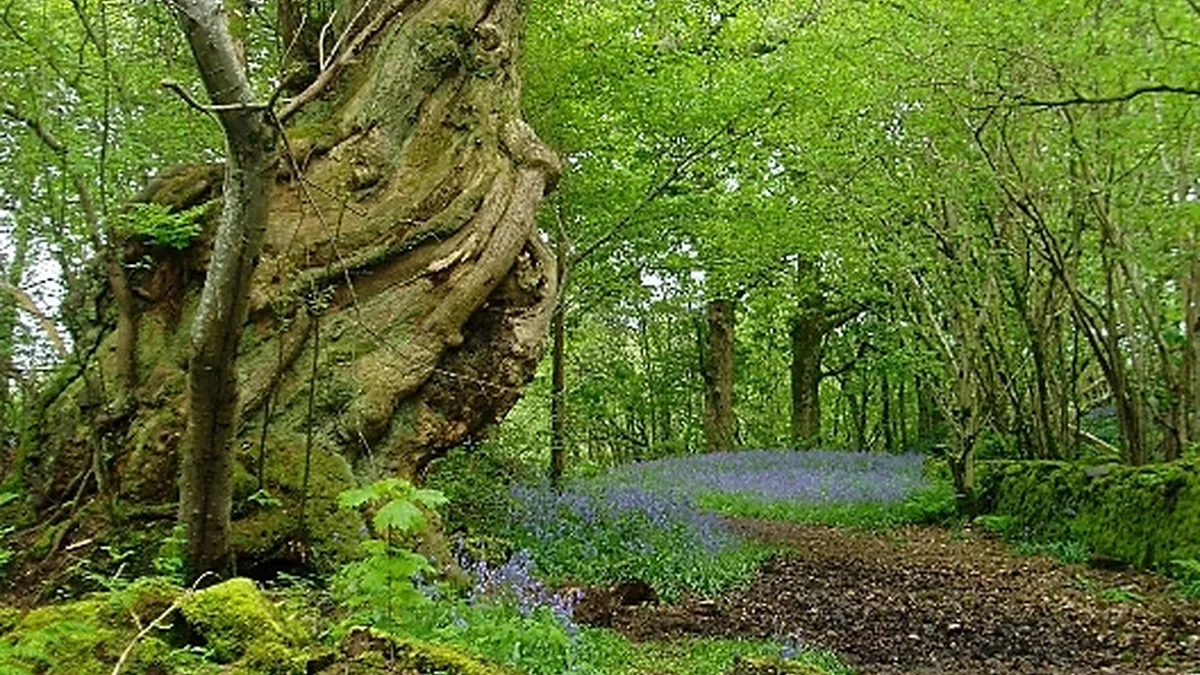
Ancient Woodland
| Definition | A woodland of great age with ecological continuity since at least 1600 AD. |
|---|---|
| Country of origin | United Kingdom |
| Legal status | Protected under planning policy and ancient woodland inventory |
| Key indicator species | Presence of ancient woodland vascular plants (e.g., bluebell, wood anemone) |
| Soil characteristic | Undisturbed, complex soil profile with high mycorrhizal activity |
| Threats | Clearance, invasive species, fragmentation, deer browsing |
| Management | Minimum intervention, deadwood retention, natural regeneration |
Origin and history
Ancient Woodland is a habitat classification originating in the United Kingdom, with analogous concepts existing in other temperate regions of Europe. The formal definition and widespread recognition of Ancient Woodland as a specific ecological category emerged in the latter half of the 20th century, driven by conservation science. Its origins, however, lie in land-use history stretching back centuries, with many British sites having existed since at least the year 1600, the official historical threshold used for mapping. Some sites are fragments of the post-glacial wildwood that covered the landscape after the last Ice Age, though these are exceptionally rare. The identification of these woods relies on historical evidence such as old maps, charters, and place-name analysis, rather than the age of individual trees. The concept underscores that ecological continuity, not merely tree age, is the critical factor, allowing for the development of complex soil profiles and species assemblages over immense timescales.
What it is for
Ancient Woodland serves as a complete, self-sustaining ecosystem that provides critical functions for biodiversity, soil stability, and nutrient cycling. Its primary ecological role is to act as a refuge for a specialized community of species that are highly dependent on stable, undisturbed conditions and cannot readily colonize newer plantations. The habitat functions as a living archive, preserving a genetic record of native flora and fauna that have adapted over centuries of ecological succession. It plays a key role in carbon sequestration, with its undisturbed soils storing significant amounts of carbon over the long term. The complex structure, from canopy to deadwood, provides myriad niches for invertebrates, fungi, birds, and mammals. Furthermore, these woods often serve as a historical record of past human interaction, such as coppicing or wood pasture, shaping the structure we see today.
Pros and cons
The primary advantage of Ancient Woodland is its irreplaceability; its complex ecological web, developed over centuries, cannot be recreated by simply planting new trees, making it the highest conservation priority for woodland species. The stability of these ecosystems often makes them more resilient to certain pests and diseases, harboring a wider genetic pool. A significant con is its extreme vulnerability to fragmentation and edge effects; even small-scale incursions like paths or development can damage soil integrity and allow invasive species to penetrate. The habitat is perpetually threatened by inappropriate management, such as replanting with non-native conifers or well-intentioned but damaging "tidying up" that removes vital deadwood. A common mistake is assuming that because it is old, it requires no management; in many cases, cessation of traditional practices like coppicing can lead to canopy closure and loss of the light-dependent flora it was meant to preserve. Those who regret its designation are often landowners facing stringent planning restrictions, as the protection severely limits potential for development or agricultural change.
Who it suits
This habitat suits species with poor dispersal abilities and specific microhabitat requirements, such as many saproxylic beetles that depend on decaying wood of certain tree species and ages. It is critical for mycorrhizal fungi that form ancient, stable networks with tree root systems, and for plants with slow-colonizing seeds like oxlip or herb-paris. The habitat suits conservation biologists and ecologists studying niche specialization, succession, and the impacts of long-term environmental change. It is also suited to historical researchers interested in landscape archaeology and the evolution of human interaction with forests. From a visitor perspective, it suits informed naturalists seeking a rich, layered biological experience rather than those seeking manicured parkland or quick recreational thrills. Ultimately, Ancient Woodland suits a long-term, custodial mindset, requiring management plans that think in decades or centuries to maintain its unique ecological functions.
Latest Ancient Woodland news
Latest reporting

Giant Scorpion Roamed Ancient Britain
A 415-million-year-old fossil of a meter-long scorpion, Praearcturus gigas, challenges ideas about when and why ancient arthropods grew so large.

Scientists Discover Evidence of Two Origins of Life on Earth
A team of international researchers has found evidence that the first free-living cells may have emerged not once, but twice on Earth, suggesting...

Tiny Ice Age Toad Reveals Clues to Los Angeles' Ancient Climate
Scientists at the La Brea Tar Pits have discovered a new extinct amphibian species, the Ice Age spadefoot toad, which provides surprising new clues...