Man-made basin supports juvenile green turtles in UAE wetland
A 2019 study found juvenile green turtles in a UAE protected area spent over 80% of their time in a man-made basin, showing how engineered habitats can aid conservation when connected to natural ecosystems.
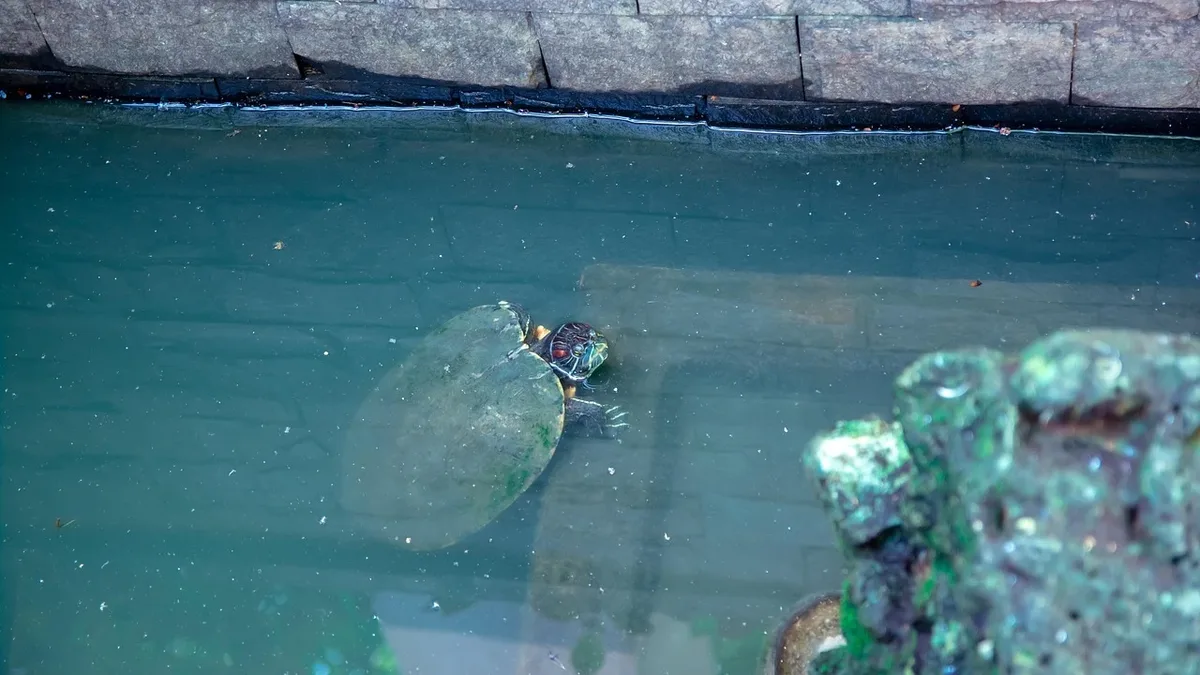
Juvenile green turtles are thriving in a human-made basin within the Al Qurm Wa Lehhfaiiah Protected Area. A 2019 tracking study led by the Sharjah Environment and Protected Areas Authority and the University of Exeter found the turtles strongly favored this artificial feature over surrounding natural habitats.
The study followed nine juvenile green turtles, each with a shell length under 60 centimeters. Researchers fitted the animals with satellite tags and monitored their movements for seven months after release. Over 2,800 location points were recorded. All turtles stayed within two miles of the wetland entrance, spending more than 80% of their time inside the marine protected area's boundary. Their core activity zones were overwhelmingly concentrated in the man-made basin.
Turtles favor the man-made basin over natural habitats
The tracked turtles had five times higher odds of being found in the human-made basin than in other parts of the wetland. In total, 77% of their core-use areas were inside this engineered environment. The basin floor is covered in algae, which likely provides a crucial food source for the young turtles. While this offers unexpected benefits, scientists caution it is not a substitute for protecting natural habitats.
Basin connectivity and ecological function
The basin's ecological value stems from its connection to the wider ecosystem. Excavated in 2003, it was originally planned as a recreational waterfront but was never used for that purpose. It was later incorporated into the protected area. Located beyond the existing mangroves, the basin links to natural mangrove channels, allowing turtles to move with the tides. The study confirmed that these natural channels and their connection to the sea remain essential. The main channel linking the ocean to the mangroves and basin lies outside the formal marine protected area boundary.
Conservation implications in threatened wetlands
The findings arrive as coastal wetlands face global threats from development. Al Qurm Wa Lehhfaiiah protects Khor Kalba, the last major coastal wetland on the UAE's east coast and a designated Ramsar site of international importance. The city of Kalba surrounds much of the wetland. The government of Sharjah protects the area from building development, fishing, and boating.
Understanding how wildlife uses modified environments is key for conservation. Dr. Owen Exeter said: "Our results show just how critical coastal wetlands can be to young green turtles." The research also recorded remarkable long-distance journeys by some turtles after they left the wetland. One swam over 700 kilometers to central Oman, and another traveled more than 500 miles to Masirah Island in Oman after 93 days in the wetland. The protected area also provides habitat for other species, including the regionally unique Arabian collared kingfisher. Effective conservation requires integrating the benefits of such man-made features with the steadfast protection of natural ecosystems.