Acoustic Monitoring For Bats And Birds
| Common name | Varies by species |
|---|---|
| Scientific name | Varies by species |
| Detection method | Acoustic monitoring via ultrasonic detectors |
| Primary activity period | Nocturnal (bats) or diurnal/crepuscular (birds) |
| Typical habitat | Varies by species, often forests, wetlands, or urban areas |
| Conservation status | Varies by species, from Least Concern to Endangered |
| Identification by sound | Species-specific call frequency and pattern |
Origin and history
Acoustic monitoring for bats and birds is a biological survey technique that originated in the late 20th century, primarily in North America and Europe. Its development is closely tied to advancements in portable digital recording technology and computing power in the 1990s and 2000s. The method evolved from earlier, more manual forms of bioacoustics research conducted in university and government agency settings. It was created to address the significant challenges of monitoring nocturnal, elusive, or vocally active species across large areas. The technique formalized as a standard ecological tool alongside the creation of specialized software for sound analysis and the growing availability of affordable, weatherproof recording units. Its history is one of convergence, drawing from fields like ornithology, chiropterology, electrical engineering, and data science.
What it was bred for
This technique was developed explicitly for the non-invasive detection, identification, and population monitoring of species that use vocalizations or echolocation calls. For bats, it was bred to overcome the near impossibility of visually counting small, fast-flying nocturnal mammals, relying instead on capturing their ultrasonic echolocation pulses. For birds, it was bred to augment or replace point-count surveys, allowing for continuous recording in dense habitats or for secretive species. A core purpose was to generate standardized, verifiable data sets that could be analyzed quantitatively over long time series. It was also bred for large-scale environmental impact assessments, such as those required for wind farms and forestry operations, where manual surveys are impractical. Furthermore, it serves as a critical tool for tracking the phenology of migration and the presence of rare or endangered species across vast landscapes.
Life cycle
The life cycle of an acoustic monitoring project begins with the strategic deployment of automated recording units, often called ARUs, in the field according to a statistical sampling design. These units are typically left in situ for periods ranging from several nights to entire seasons, programmed to record during specific activity periods like dawn, dusk, or full nights. Following deployment, the units are retrieved, and the vast volumes of raw audio data are transferred to secure storage for processing. The next phase involves automated analysis using software with species-specific call libraries or machine learning algorithms to scan recordings and generate detection logs. This processed data then undergoes validation by human experts to correct false positives or identify unknown calls, culminating in a finalized dataset. The final stage is the interpretation and reporting of findings, which feeds into conservation status assessments, regulatory compliance documents, or scientific publications, thereby informing the next cycle of monitoring.
Character and appearance
An acoustic monitoring station is characterized by its functional, utilitarian appearance, designed for durability and minimal interference. The core component is a weatherproof case housing a digital recorder, batteries, and often a solar panel, typically mounted on a pole, tree, or other stable structure. A critical visible feature is the microphone, which may be housed in a protective rain shield and is often omnidirectional to capture sound from all angles. For bat monitoring, the system includes an ultrasonic microphone capable of detecting frequencies far beyond human hearing, which may be paired with a parabolic reflector. The setup is deliberately unobtrusive and camouflaged to avoid vandalism and to ensure recorded behaviors are not influenced by its presence. The character of the system is defined by its autonomy, operating silently and continuously to create an objective auditory snapshot of the site's biodiversity.
Overview
Acoustic monitoring for bats and birds is a passive, technology-driven method for ecological surveillance that converts sound into biodiversity data. It provides a permanent record of species presence that can be re-analyzed as identification algorithms improve, offering advantages over ephemeral human observations. The technique is particularly valuable for surveying cryptic species, monitoring activity patterns across the full diel cycle, and covering large or inaccessible geographic areas. It generates massive datasets that require significant computational resources and expert validation to transform raw audio into reliable species occurrence information. While powerful, it does not typically provide direct population counts or density estimates without careful calibration and study design. It stands as a cornerstone of modern wildlife monitoring, integral to both pure ecological research and applied environmental management.
What to know
Effective acoustic monitoring requires careful pre-survey planning to determine appropriate placement, recording schedules, and duration to answer specific research questions. Users must know that microphone sensitivity and recorder quality vary greatly, directly impacting detection probability for high-frequency bat calls or distant bird songs. It is critical to understand that automated identification software is not infallible; results always require manual vetting by an experienced analyst to ensure accuracy. Practitioners should know that environmental conditions like wind, rain, and insect noise can obscure target signals, and site selection must account for this acoustic interference. One must be aware of the substantial data management challenge, encompassing secure storage, efficient processing workflows, and meticulous metadata tagging for every recording. Furthermore, legal and ethical considerations, such as permits for recording in protected areas or using recordings of endangered species, are essential knowledge before deployment.
Common questions
A common question is whether acoustic monitoring can identify every bat or bird species present, to which the answer is no, as some species have non-distinct or overlapping call signatures. People often ask how far the microphone can detect animals, which depends on call intensity, frequency, and ambient noise but typically ranges from a few meters for faint bat calls to over a hundred meters for loud bird songs. Many inquire about the cost, which is highly variable but involves significant initial investment in hardware and ongoing costs for data storage, processing time, and expert analysis. A frequent question is how the method compares to traditional mist-netting or point counts, and it is generally seen as complementary, providing different types of data often used in conjunction. Users commonly ask about battery life and storage capacity, which are determined by recording schedule and resolution but often last for weeks on a single deployment. Finally, many wonder if the presence of the recorder affects animal behavior, which current evidence suggests is minimal for most species, making it a genuinely passive tool.
Pros and cons
A major pro is the method's ability to collect unbiased, continuous data across time scales and habitats where human observers cannot feasibly work. It creates a verifiable, archival record that permits retrospective analysis and quality control, which is not possible with traditional visual surveys. A significant con is the substantial post-collection effort required; the ease of gathering terabytes of audio belies the months of expert labor needed to accurately identify calls and clean datasets. Users often regret under-budgeting for this analysis phase, leading to data backlogs or poorly validated results. The common mistake is deploying units without a robust statistical design or adequate consideration of detection radii, rendering the collected data scientifically weak or incomparable. Furthermore, the technique can foster a complacent reliance on automation, where the limitations of call libraries and algorithms are forgotten, potentially missing rare or atypical vocalizations.
Who it suits
This technique suits government environmental agencies and conservation NGOs that require standardized, defensible data for long-term trend monitoring and regulatory compliance. It is well-suited to academic researchers and graduate students studying animal communication, community ecology, or the impacts of anthropogenic noise and habitat change. It suits environmental consulting firms conducting large-scale baseline surveys for infrastructure projects like wind energy facilities, where manual surveys are prohibitively expensive and dangerous. The method does not suit casual naturalists or projects with very limited budgets, due to the high costs of equipment and the necessity of specialized analytical expertise. It is ideal for projects focused on specific, vocally identifiable species or guilds, rather than initial explorations of completely unknown faunas. Finally, it suits patient, detail-oriented practitioners who value data integrity and are prepared to manage complex, multi-stage workflows from field deployment to final report.
Latest Acoustic Monitoring For Bats And Birds news
Latest reporting

Bat DNA Holds Clues to Longevity and Disease Resistance
A genomic study of long-lived Myotis bats reveals strong links between lifespan, immune function, and strategies for eliminating damaged cells...

One in Nine Migratory Bird Species Faces Extinction
A global report reveals 11% of migratory birds are threatened with extinction, with 45% in decline, but highlights conservation successes and a new...
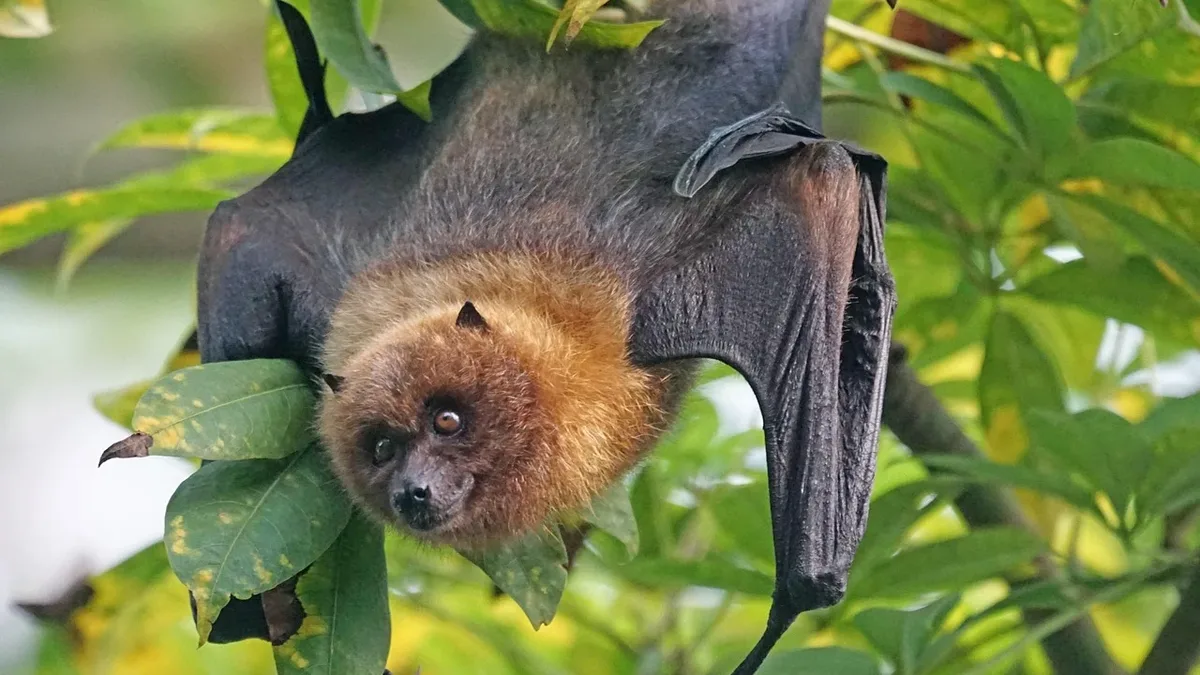
Study Finds Australian Wildlife Moving Into Homes
A decade of wildlife rescue data shows native possums, bats, and wombats are increasingly using houses as substitute habitats, with roof spaces and...

Sarvarjuaq Polynya Faces an Ice Threat
Scientists and Inuit in Canada's High Arctic are monitoring the unique Sarvarjuaq polynya, an 85,000 sq km open-water ecosystem.

Cotswolds farmer boosts biodiversity with
Henry Astor of Bruern Farms is restoring biodiversity by planting heritage wheat and wildflower meadows, attracting red-listed birds and creating a...
Decoding Beluga Chatter Aids Conservation
Researchers are using hydrophones to decode the complex communication of beluga whales and other cetaceans. This acoustic research reveals cultural...