Beaver Reintroduction
| Common name | North American Beaver |
|---|---|
| Species | Castor canadensis |
| Native range | North America |
| Reintroduction status | Ongoing in various regions |
| Habitat | Freshwater systems with available woody vegetation |
| Identifying feature | Broad, flat tail |
| Primary sign of presence | Dams and lodges constructed from wood and mud |
Origin and history
Beaver reintroduction refers to conservation initiatives aimed at re-establishing populations of the Eurasian beaver (*Castor fiber*) and the North American beaver (*Castor canadensis*) in regions from which they were extirpated. The Eurasian beaver was hunted to near extinction across Europe and Asia by the early 20th century for its fur, meat, and castoreum, surviving only in small, fragmented refuges. Organized reintroduction programs for the Eurasian species began in the mid-20th century, with significant efforts accelerating from the 1980s onward across many European countries. In the United Kingdom, official trial reintroductions began in the early 21st century, notably in Scotland from 2009 and England from the 2020s. North American beaver reintroductions have also been undertaken, often focused on restoring wetland ecosystems and mitigating water scarcity in arid western states. These programs are typically led by government environmental agencies, wildlife trusts, and conservation NGOs, based on established ecological research.
What it was bred for
Beavers are wild animals, not domesticated or bred for a specific human purpose within reintroduction programs. The primary goal of reintroduction is ecological restoration, leveraging the beaver's natural behaviors to recreate and manage wetland habitats. Their dam-building activities are harnessed to increase biodiversity, slow water flow, reduce flooding downstream, improve water quality through sediment filtration, and create firebreaks in dry landscapes. Reintroduction projects do not seek to alter the species but to restore its natural ecosystem engineering role for broad environmental benefits. In some historical contexts prior to extirpation, beavers were exploited for resources, but modern reintroduction is solely for conservation and ecosystem service outcomes. The animals released are typically either translocated from existing wild populations or sourced from captive-breeding programs specifically designed for conservation.
Life cycle
Beavers are monogamous rodents that typically mate for life, breeding once per year in late winter. Kits, usually numbering one to four, are born after a gestation of approximately 100-110 days and are fully weaned by around six weeks old but remain with the family group for up to two years. Juvenile beavers disperse in their second or third spring to establish their own territories, a process that can involve traveling significant distances overland. Beavers reach sexual maturity around age two to three and can live for 10 to 15 years in the wild, though many succumb younger due to predation, disease, or territorial conflicts. Their life cycle is heavily dependent on the availability of suitable aquatic habitat and woody vegetation for food and construction. Family groups, or colonies, work collectively to maintain and expand their lodge and dam systems, which are central to their survival and reproductive success.
Character and appearance
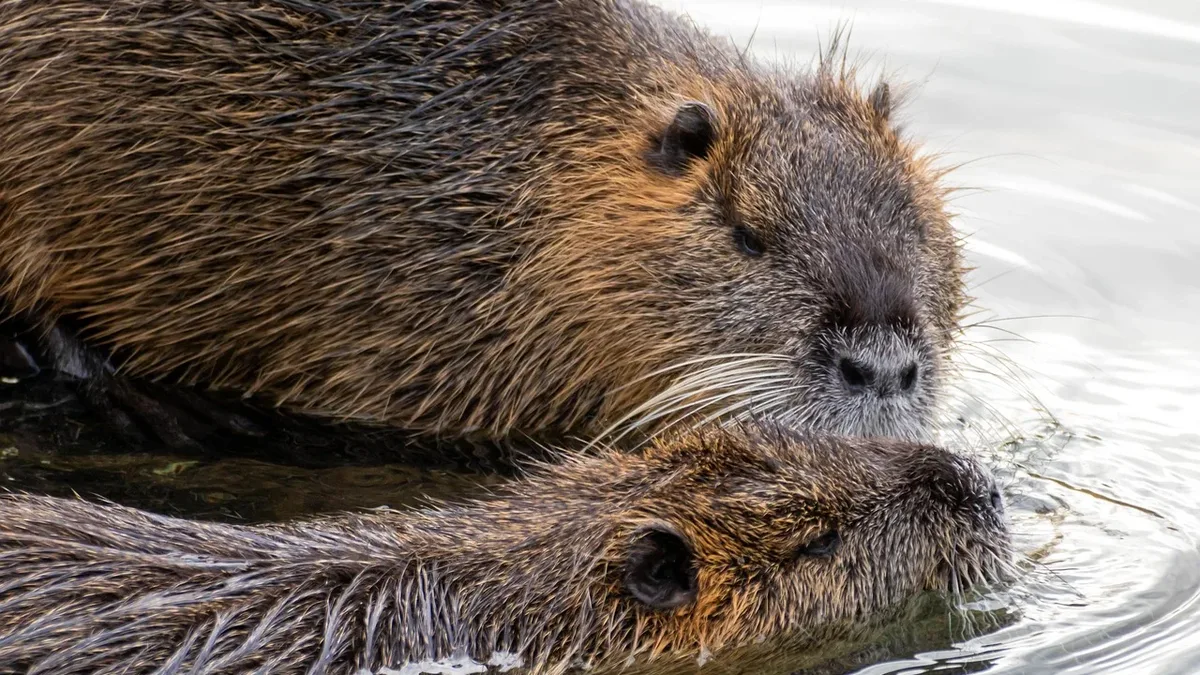
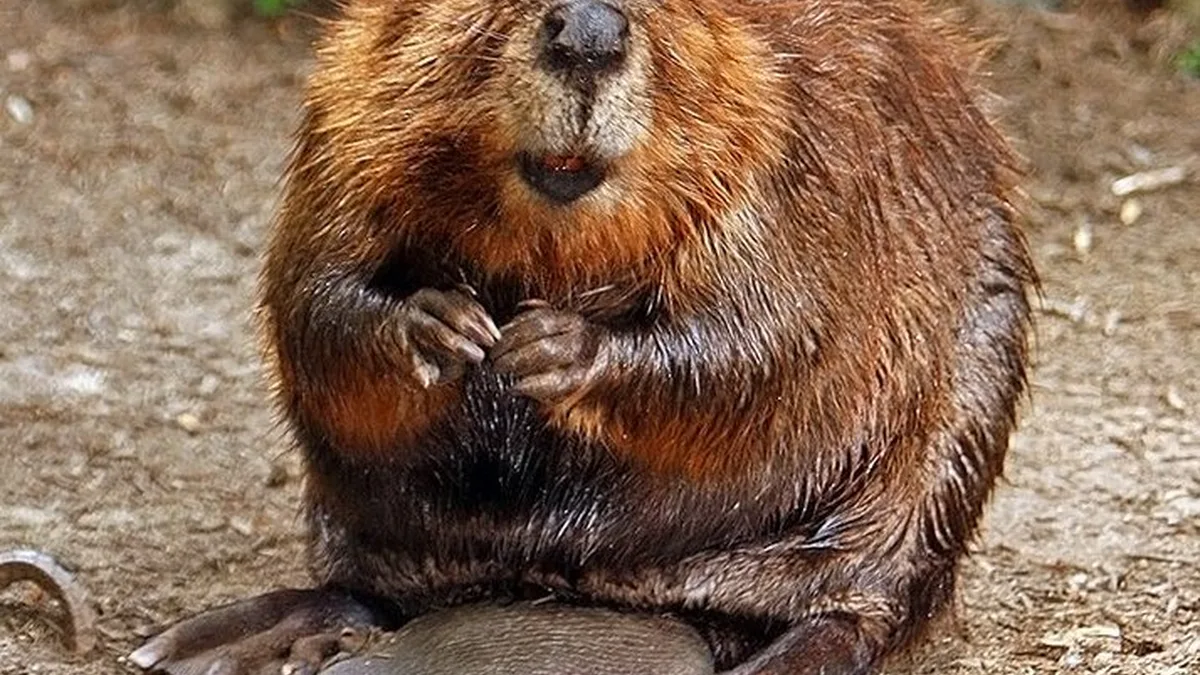
The Eurasian and North American beavers are large, semi-aquatic rodents with stout, robust bodies adapted for swimming and woodcutting. They possess a broad, flat, scaly tail used as a rudder and for fat storage, webbed hind feet, and powerful incisors that grow continuously, coated in orange enamel. Their character is predominantly nocturnal and crepuscular, with individuals being industrious, territorial, and family-oriented. They are not aggressive unless cornered but will slap their tail loudly on the water as a warning signal to colony members. Their physical appearance is characterized by a dense, waterproof underfur covered by longer guard hairs, historically making their pelts highly valuable.
Overview
Beaver reintroduction is a form of conservation translocation where individuals are released into historically occupied habitats to re-establish self-sustaining populations. It is a multi-stage process involving extensive habitat suitability assessments, stakeholder consultation, and often legal permitting. The practice is implemented across the Northern Hemisphere, with programs varying in scale from small, fenced trial sites to large-scale, open-landscape releases. Success is measured by evidence of breeding, dam construction, and long-term colony establishment without ongoing human intervention. These projects sit at the intersection of ecology, hydrology, and land management, often generating both significant biodiversity gains and human-wildlife conflicts. The overview encompasses not just the animal's return but the subsequent, often dramatic, transformation of the landscape through the beaver's ecosystem engineering.
What to know
Observing reintroduced beavers requires patience, as they are most active at dawn and dusk and are wary of human presence. Look for signs rather than the animal itself: gnawed tree stumps with distinctive tooth marks, well-trodden "beaver canals," and of course, dams and lodges constructed from branches and mud. In many reintroduction areas, such as specific river catchments in Scotland and England, guided wildlife watches or publicly accessible observation hides may be available. It is crucial to know that beavers and their lodges are legally protected in many jurisdictions, and disturbing them is an offense. Landowners and managers within reintroduction zones should be aware of the potential for localized flooding, tree loss, and crop damage, for which management frameworks and sometimes compensation schemes exist. Public engagement and education are considered key components of most modern reintroduction projects to foster coexistence.
Common questions
A common question is whether beaver dams increase flood risk, to which the answer is that while they can cause localized flooding upstream, they typically attenuate flood peaks downstream by slowing the release of water. People often ask if North American and Eurasian beavers can interbreed; they cannot, as they are separate species with different chromosome numbers. Many inquire about how beavers are sourced for release, which involves either live-trapping and translocating from healthy populations where they are abundant or using animals from specialist conservation breeding programs. A frequent concern is damage to valuable trees, which can be mitigated through protective wrapping or fencing of individual trees in key areas. Questions also arise about predators; in Europe, beavers may be preyed upon by wolves and lynx where present, while in many reintroduction areas they face minimal natural predation. People commonly ask if they can be kept as pets, which is illegal in most places and inadvisable due to their need for complex aquatic habitats and powerful, destructive capabilities.
Pros and cons
A significant pro is the rapid creation of complex wetland habitats that support a wide range of other species, from amphibians and fish to birds and invertebrates, thereby boosting local biodiversity. Beaver activity also improves water quality, increases carbon sequestration in water-logged soils, and can enhance aquifer recharge. A major con is the potential for conflict with human land uses, including flooding of agricultural land, forestry, infrastructure, and private gardens, which can be costly and difficult to manage. Some landowners regret the introduction due to unexpected impacts on drainage or loss of specific trees. The common mistake is underestimating the spatial impact of a successful colony; beavers can alter landscapes hundreds of meters around their core territory. Furthermore, once established, beaver populations are difficult to control or remove due to legal protections and public sentiment, locking in long-term management commitments for agencies and landowners.
Who it suits
Beaver reintroduction suits large-scale, landscape-level conservation projects where the goal is systemic ecological restoration rather than the preservation of a single species. It is suited to organizations and government agencies with long-term funding and commitment for both the initial release and the ongoing monitoring and potential conflict management. This approach suits river catchments with low-density human settlement and a tolerance for dynamic, natural floodplain processes. It is less suited to intensively managed agricultural landscapes or areas with high-value infrastructure immediately adjacent to watercourses without significant preparatory mitigation. The concept generally appeals to conservationists, rewilding advocates, and those prioritizing ecosystem function, but can be challenging for landowners focused on short-term agricultural productivity or with fixed drainage requirements.