Binoculars And Scopes
Origin and history
Binoculars and scopes as a combined category of optical instruments originated in Europe, with their foundational development occurring across several centuries. The basic principles of the refracting telescope were established in the Netherlands in the early seventeenth century, leading to the creation of the first astronomical telescopes. The development of the prismatic binocular, which folded the light path to create a compact, handheld instrument, is credited to Italian and German innovators in the late nineteenth century. The twentieth century saw mass production and significant optical refinements emerge from manufacturers in Germany, Japan, and later the United States. These devices evolved from exclusive tools for astronomers and military officers to essential equipment for a wide range of civilian activities.
What it was bred for
These instruments were developed primarily to extend the resolving power and light-gathering capability of the human eye across great distances. Early telescopes were bred for celestial observation, allowing astronomers to map stars and planets invisible to the naked eye. Terrestrial spotting scopes and monoculars were subsequently bred for military reconnaissance and naval navigation, providing critical tactical advantage. Handheld binoculars were bred for field use by naturalists, hunters, and sports enthusiasts to observe wildlife or distant action without disturbing the subject. Riflescopes were specifically bred for precise aiming in hunting and marksmanship, integrating reticles for targeting. The overarching purpose for all variants remains the same: to render distant objects in apparent proximity and finer detail for identification, study, or targeting.
Life cycle
The life cycle of a binocular or scope is predominantly defined by its care and mechanical wear rather than a biological progression. A well-maintained instrument from a quality manufacturer can remain fully functional for decades, often outliving its original owner. The initial phase involves careful handling to avoid misalignment of the optical prisms, a condition known as collimation error, which can occur from a single sharp impact. Over years of use, lens coatings may develop fine scratches from improper cleaning, and the exterior armor may degrade from prolonged exposure to sunlight and moisture. Mechanical parts like the focus wheel and diopter adjustment can become stiff or gritty if dust and debris infiltrate the seals. Ultimately, failure typically comes from irreparable optical damage, severe corrosion, or the obsolescence of its optical performance compared to newer models, at which point it is retired or relegated to backup duty.
Character and appearance
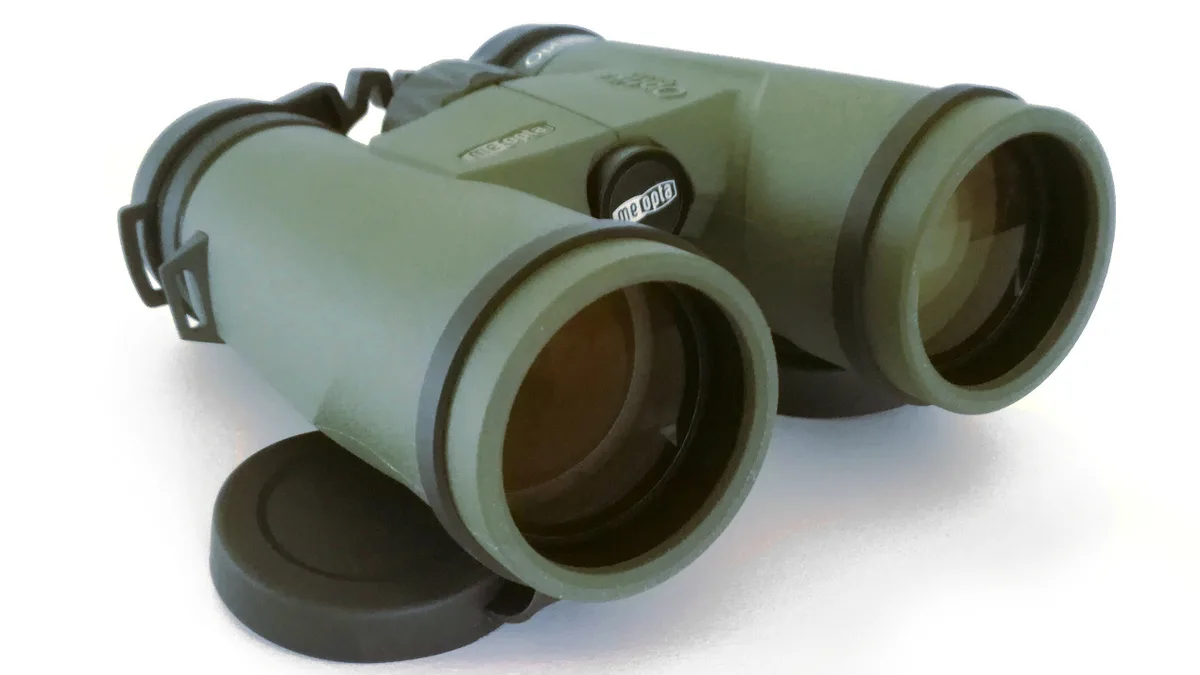
The character of these instruments is defined by a utilitarian design focused on optical clarity, durability, and ergonomic function. Appearance varies widely, from the sleek black rubber armor of modern marine binoculars to the stippled green finish of a hunting scope. Central characteristics include objective lens diameter, magnification power, and field of view, which are permanently marked on the device. High-quality models exhibit a solid, precise feel with smooth focusing mechanisms and tight tolerances that prevent wobble in moving parts. Optically, a good instrument provides a bright, sharp image with neutral color rendition and minimal distortion at the edges of the view. The overall character is one of purposeful tool-making, where every design element, from the shape of the eyecups to the texture of the grip, is subservient to the goal of delivering a stable, clear view.
Overview
Binoculars and scopes are portable optical devices that use an arrangement of lenses and prisms to magnify distant objects. They are fundamental tools for observation in fields ranging from ornithology and astronomy to security and spectator sports. The category encompasses several distinct types, including handheld binoculars, monoculars, spotting scopes on tripods, and telescopic sights mounted on firearms. Performance is governed by optical laws, where increases in magnification often reduce field of view and brightness, and larger objective lenses gather more light but increase weight and size. Their utility is entirely dependent on the user's specific application, as no single model excels in all possible scenarios. They serve as a direct mechanical extension of human vision, allowing detailed study and interaction with a world that would otherwise be beyond visual reach.
What to know
You must know that magnification is not the sole determinant of performance, and excessively high power can make an image dim and shaky without a tripod. The size of the objective lenses, measured in millimeters, directly influences light-gathering ability and low-light performance, directly impacting usability at dawn or dusk. Optical coatings are critical, with fully multi-coated lenses providing the brightest and clearest image by reducing internal light loss and glare. Waterproofing and nitrogen purging are essential features for any use in humid or variable conditions, as they prevent internal fogging. The field of view, expressed as either an angular width or a linear width at a specific distance, determines how much area you can see at once, which is vital for tracking moving subjects. Always test for eye relief, the distance your eye can be from the eyepiece and still see the full field of view, especially if you wear eyeglasses.
Common questions
A common question is what the numbers on binoculars, such as 8x42, actually mean, where the first number is the magnification and the second is the diameter of the objective lenses in millimeters. People frequently ask about the best all-around binocular, which is generally considered to be in the 8x42 or 10x42 range for a balance of power, light grasp, and hand-holdability. Many users inquire about the difference between roof prism and porro prism designs, with roof prisms offering a straight, streamlined body while porro prisms often provide greater depth perception at a lower cost for equivalent optical quality. A recurring question is whether compact binoculars are as good as full-size models, and the answer is that they sacrifice light-gathering ability and sometimes field of view for portability. New users often ask if they need a tripod, which becomes necessary for any magnification over about 12x for binoculars or for prolonged viewing with any spotting scope. People also commonly question how to properly clean lenses, which requires a soft brush for dust and a microfiber cloth with lens-specific fluid, never household cleaners or abrasive materials.
Pros and cons
High-quality optics provide a bright, sharp image that can reveal textures and behaviors invisible to the naked eye, enhancing understanding and appreciation. A significant con is that top-tier performance comes with substantial cost, weight, and bulk, making the best instruments a burden to carry on long excursions. The common mistake is purchasing excessive magnification, resulting in a narrow field of view, dim image, and unbearable hand shake that frustrates most users. Many people regret choosing a model that is not fully waterproof or fog-proof, leading to internal condensation that renders the device useless during critical moments in humid or rainy conditions. Budget models often suffer from poor optical alignment, causing eye strain and headaches during prolonged use, which is a frequent source of disappointment for casual buyers.
Who it suits
Full-sized binoculars in the 8x42 to 10x50 range suit serious birdwatchers, wildlife enthusiasts, and hunters who require a balance of light grasp and stability for extended field use. Compact binoculars with smaller objective lenses suit travelers, concert-goers, and casual hikers for whom low weight and portability are the highest priorities. High-magnification spotting scopes on sturdy tripods suit long-distance observers like astronomers, target shooters, and coastal birders who require detailed, stationary viewing. Rugged, waterproof binoculars with built-in compasses and rangefinders suit mariners and search-and-rescue personnel who operate in harsh, wet environments. Simple, durable porro prism models suit beginners and educational groups where cost-effectiveness and durability are more critical than a slim profile. Ultimately, the instrument must suit the user's specific activity, physical ability to carry and hold it steady, and willingness to invest in the optical quality required for their purposes.