New deep-sea coral family discovered in tropical eastern Pacific
Scientists have identified a brilliant yellow, tree-like coral off Costa Rica so distinct it required the creation of an entirely new family, Laurinqueidae.
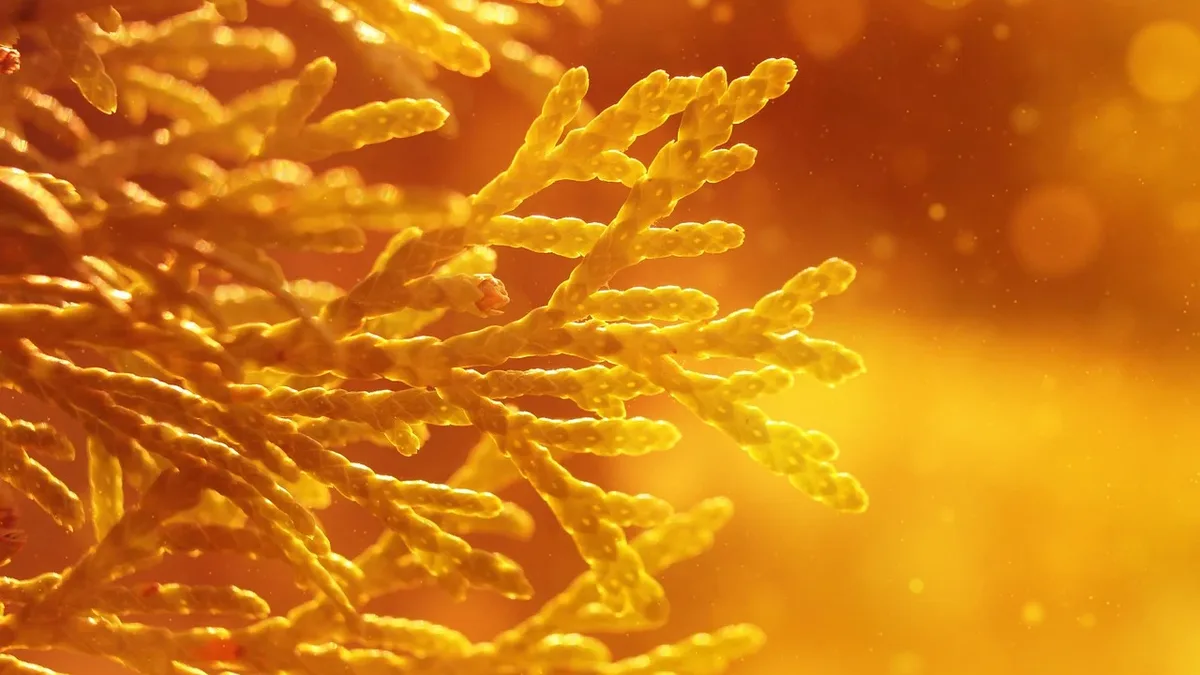
A brilliant yellow coral discovered off Costa Rica proved so unusual that scientists had to create an entirely new family to classify it. The coral, found on Pacific seamounts, belongs to a previously unknown evolutionary lineage, with initial genetic and anatomical analyses conflicting with all known families.
Standard genetic sequencing of three genes gave contradictory results, each pointing to a different and unrelated family. Initial morphological analysis also failed to match any known species. This confusion necessitated deeper investigation to resolve the organism's true place on the tree of life.
Naming and classification of Laurinqueidae
The coral was assigned to a new genus and family inspired by Tolkien's Elvish language, reflecting its golden, tree-like appearance. Researchers established the new family Laurinqueidae and the new genus Laurinque, derived from 'Laurinquë,' meaning 'golden tree' in Quenya. The species name elenya means 'stellar' or 'of the stars' in the same constructed language.
The new genus Laurinque was created specifically to house this single, unique species. This formal naming allows the scientific community to reference the discovery as a distinct evolutionary entity.
Habitat and physical characteristics
The coral forms tall, vivid yellow colonies in a tree-like pattern on rocky seamounts. Some colonies grow more than a meter tall. It was discovered between 360 and 529 meters below the Pacific Ocean's surface, especially abundant on rocky outcrops where dense populations of brittle stars covered nearly every available surface.
The coral's common name references these dense brittle-star populations surrounding it. Its striking color and form make it a visually distinct component of the deep-sea landscape it inhabits.
Scientific methods and research support
Researchers used the remotely operated vehicle SuBastian to collect specimens during expeditions in 2019 and 2023. The research vessels Falkor and Falkor (too), operated by the Schmidt Ocean Institute, supported the work, which explored seamounts near Isla del Coco and along Costa Rica's Pacific margin.
To clarify the coral's evolutionary position, scientists employed phylogenomics, comparing hundreds of genes. Colleagues including Cathy McFadden, Catalina Murillo, and Andrea Quattrini contributed to the molecular analyses. This detailed genetic work showed the coral sits closest to the family Eunicellidae but differs significantly in both genetics and anatomy. Grouping it with Eunicellidae would misrepresent its distinct evolutionary path.
Broader ecological and scientific context
Deep-sea coral gardens like this one are classified as vulnerable marine ecosystems. They provide critical habitat for many deep-sea life forms and are important centers of biodiversity. This discovery shows how much remains unknown, as the deep ocean covers roughly two-thirds of Earth's surface and most of its life has never been formally described.
The finding reveals a previously unknown evolutionary lineage in these deep-sea ecosystems. The research has been published in the open-access journal ZooKeys, allowing scientists globally to study and build upon this evolutionary discovery.