Surinam toad hunts in darkness with touch-sensitive finger lobes
The Surinam toad uses 128 miniature sensory lobes on its fingertips to detect prey through water vibrations, enabling it to hunt in the Amazon's total darkness.
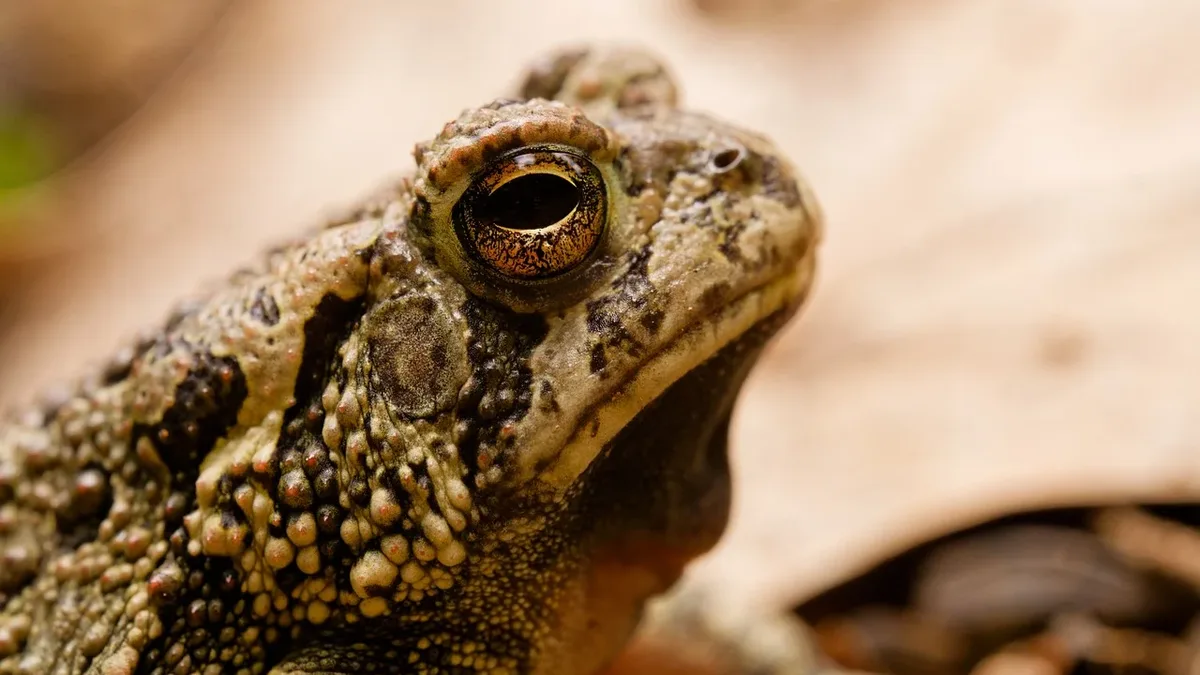
The Surinam toad hunts in complete darkness using a unique touch-sensing system in its fingertips. Each of its eight fingers ends in a cluster of 16 tiny lobes, creating 128 miniature sensory structures packed with nerve endings that detect minute movements in the surrounding water.
How the toad uses its spread fingers to hunt in darkness
By extending its front legs with fingers wide, the toad senses approaching fish through vibrations even without light. Steven Allain, a researcher, explained the process: "Even in complete darkness, the frog can sense a fish approaching by holding its long front legs outstretched with its fingers spread wide." This mechanoreception allows it to pinpoint prey in zero visibility.
Adaptations for life in the Amazon’s murky waters
Its flat body, tiny eyes, and warty skin help it blend and survive in low-visibility habitats. The toad is adapted to the murky waters of the Amazon basin. Its brown and warty skin provides camouflage in these dim environments, complementing its specialized touch-based hunting method.
Broader context: sensory systems across reptiles and amphibians
Other reptiles and amphibians have evolved extraordinary sensory capabilities to perceive their environment. Snakes use infrared detection, while amphibians rely heavily on skin-based sensing.
Snakes integrate infrared information with vision to locate and strike prey accurately. Amphibians, including the Surinam toad, use their skin for multiple functions. Cutaneous mechanoreception allows them to detect touch, pressure, and vibration. Their skin also enables breathing, drinking, and toxin excretion. Also, magnetoreception-the ability to detect Earth's magnetic field-has been observed in salamanders, frogs, turtles, crocodilians, and some lizards. This field varies across the planet and can serve as a natural map for navigation.
The toad’s strike: a suction-powered ambush
When its finger lobes detect a nearby fish, the toad executes a lightning-fast ambush. It hunts by suddenly opening its mouth and sucking in prey. This explosive suction happens in an instant, capturing the target before it can escape. Researchers from the University of California discovered this detailed sensory mechanism. Steven Allain noted, "The Surinam toad is one of the strangest frogs on Earth."