Plunge-diving seabirds' reinforced vertebrae explained
A study reveals the unique neck structure that allows gannets to survive high-speed dives, while a five-year initiative in Italy has created safer corridors for the endangered Marsican brown bear.
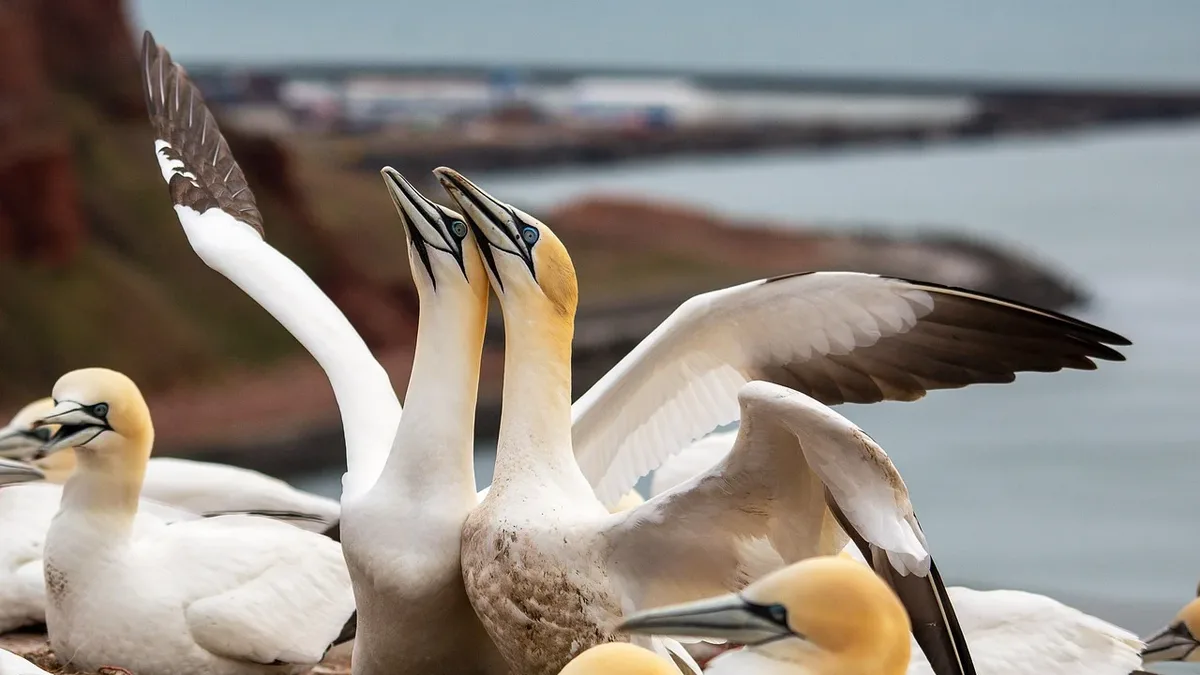
New research details the anatomical adaptations that let seabirds survive violent plunge-dives into the ocean. Meanwhile, a multi-year conservation effort in Italy's Central Apennines has made significant progress in creating safer landscapes for a rare bear population to recover.
Neck structure of plunge-divers
A University of Washington study published on October 12, 2026, reveals that northern gannets and boobies possess uniquely reinforced neck vertebrae to withstand the impact of hitting water at speeds up to 70 miles per hour. The research, led by graduate student Megan Vandenberg and senior author Bart Boom, used CT scans and geometric morphometrics to compare the cervical vertebrae of diving and non-diving birds from museum specimens.
The analysis showed that plunge-diving birds have stockier, more block-like vertebrae that are thicker, wider, and shorter than those of other birds. Also, the second through sixth cervical vertebrae in gannets and boobies feature an additional articular facet-an extra contact surface that helps stabilize the neck column upon impact. This adaptation is thought to prevent the neck from bending backward, transferring the compressive load down the vertebral stack instead. While other diving birds like kingfishers also evolved more robust vertebrae, the distinctive extra facet appears unique to the gannet and booby family.
Marsican bear corridor initiative
A five-year initiative called LIFE Bear-Smart Corridors has strengthened the foundations for the recovery of Italy's critically endangered Marsican brown bear. The project, coordinated by Rewilding Europe and local partners, established 16 Bear-Smart Communities across the Central Apennines to improve coexistence between people and the estimated 81 bears in the population.
The work focused on making the shared landscape safer for bears to move through. Practical measures included installing hundreds of preventive electric fences, bear-proof waste bins, and reinforced chicken coops. Habitat improvements involved pruning over 650 abandoned fruit trees to increase natural food and removing more than 80 kilometres of obsolete barbed wire. Mario Cipollone, Team Leader for Rewilding Apennines, stated that the holistic approach has resulted in a more secure landscape for bears today compared to when the project began.
Community engagement has been a cornerstone, moving local people from being conservation spectators to active participants. Committees, events, and workshops have built awareness and strengthened connections with the bears. This work is considered essential because the bear's historic core protected area has limited room for growth, and the future of the subspecies depends on its ability to safely expand into surrounding human-dominated landscapes.