Sperm whale habitat in Indian Ocean to shrink up to 40% by 2100
A new study projects that climate change will reduce suitable sperm whale habitat in the southwest Indian Ocean by 20% to 40% by the century's end, though stronger currents may partially offset losses. Researchers identified persistent core areas off the Seychelles and Mauritius that could serve as climate refuges, highlighting the need for large-scale, adaptive conservation under the new High Seas Treaty.
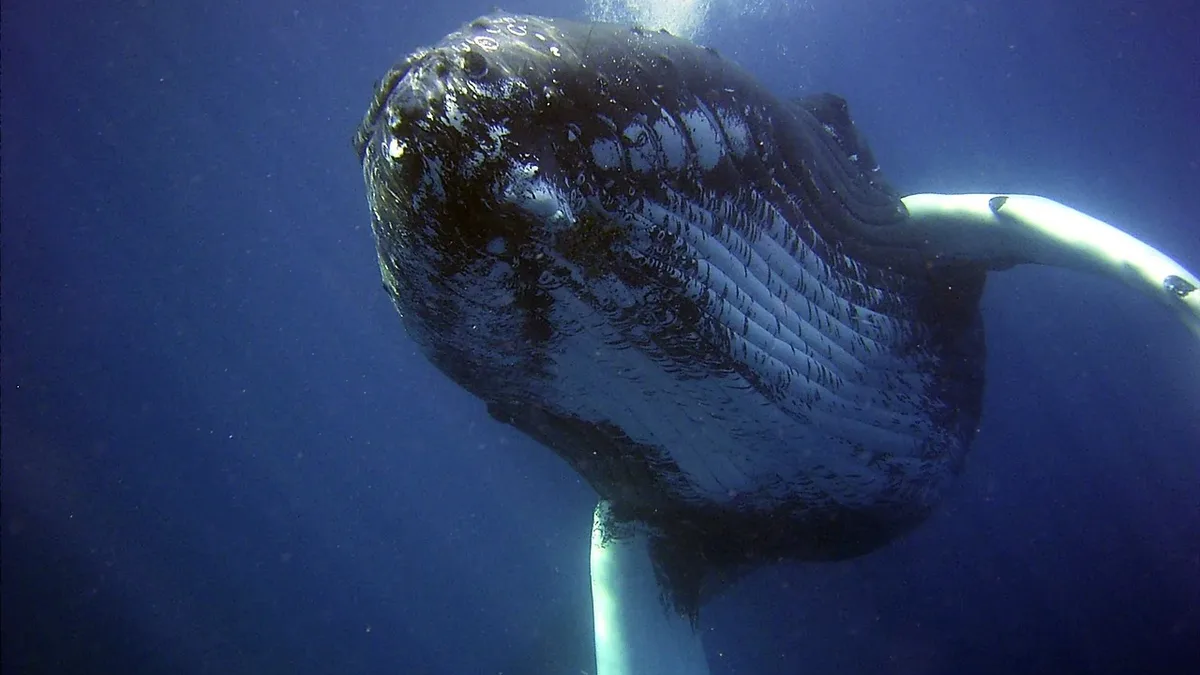
Suitable sperm whale habitat in the southwest Indian Ocean is expected to decline significantly by 2100 under climate change, with losses varying across emissions scenarios. Suitable whale habitat is expected to shrink as temperatures rise. The study projects that stronger currents predicted by extreme warming may benefit whales. The projected habitat loss by the end of the century is detailed in the table below.
| Climate Scenario (SSP) | Description | Projected Habitat Loss by 2100 |
|---|---|---|
| SSP1-2.6 | Optimistic | 40% |
| SSP2-4.5 | Intermediate | 37% |
| SSP5-8.5 | Pessimistic | 20% |
The study notes that damage from extreme warming may be offset by stronger currents, but wider ecosystem impacts were not assessed.
Persistent core areas identified
Despite overall habitat loss, long-term core areas for sperm whales are projected to remain off the Seychelles and Mauritius and along steep ridges in between. Underwater topography, particularly steep slopes, is key for sperm whales as it promotes nutrient upwelling that supports deep-sea squid, their prey. Dr. Kirsten Young of the Exeter Cetacean Research Group recalled seeing sperm whales hundreds of kilometers from land around Saya de Malha Bank during a research trip.
Need for expansive, dynamic protection
Given sperm whales' wide-ranging movements for feeding, breeding and migration, effective conservation requires large-scale, adaptive protection strategies. Sperm whales travel great distances, requiring protection that covers extensive areas for feeding, breeding, and migration. Alexander Lomas, lead author of the study, emphasized this point. "Sperm whales travel great distances, so protection must cover extensive areas to allow them to feed, breed and migrate," he said.
The study provides a baseline for building protection but identifies a changing patchwork of suitable areas due to climate change. The High Seas Treaty aims to bring about global-scale conservation addressing overfishing, noise, pollution, and climate change. Young concluded that in a rapidly changing ocean, we need to know where suitable habitat is likely to persist in the future.
Study foundation and collaboration
The research combines two decades of sperm whale data with climate models and involved international collaboration across nine research groups and multiple organizations. The study was led by the University of Exeter and published in the journal Endangered Species Research. The paper is titled 'Using ensemble ecological niche models to predict long-term core habitat of sperm whales (Physeter macrocephalus) in the southwest Indian Ocean under future climate scenarios'.
Dr. Jeremy Kiszka of Florida International University was involved in the study. Violaine Dulau chairs IndoCet, the Indian Ocean network for cetacean research. Lomas highlighted the benefits of international scientific collaboration involving nine research groups and organisations from different countries. Contributing organizations included the Marine Megafauna Conservation Organisation, GLOBICE, the African Aquatic Conservation Fund, and the IndoCet Consortium.
Historical context and data gaps
Sperm whales in the region were heavily targeted by historical whaling, and knowledge of their populations and movements has remained limited since. The new study uses data from studies carried out over the last two decades to fill these gaps. The study provides a baseline for building protection based on identified core habitats that are likely to persist despite climate change.