Himalayan Floods Expose Climate Risks
A glacial collapse in Nepal has triggered deadly floods, leaving 275 Indians missing, including pilgrims and hydropower workers.
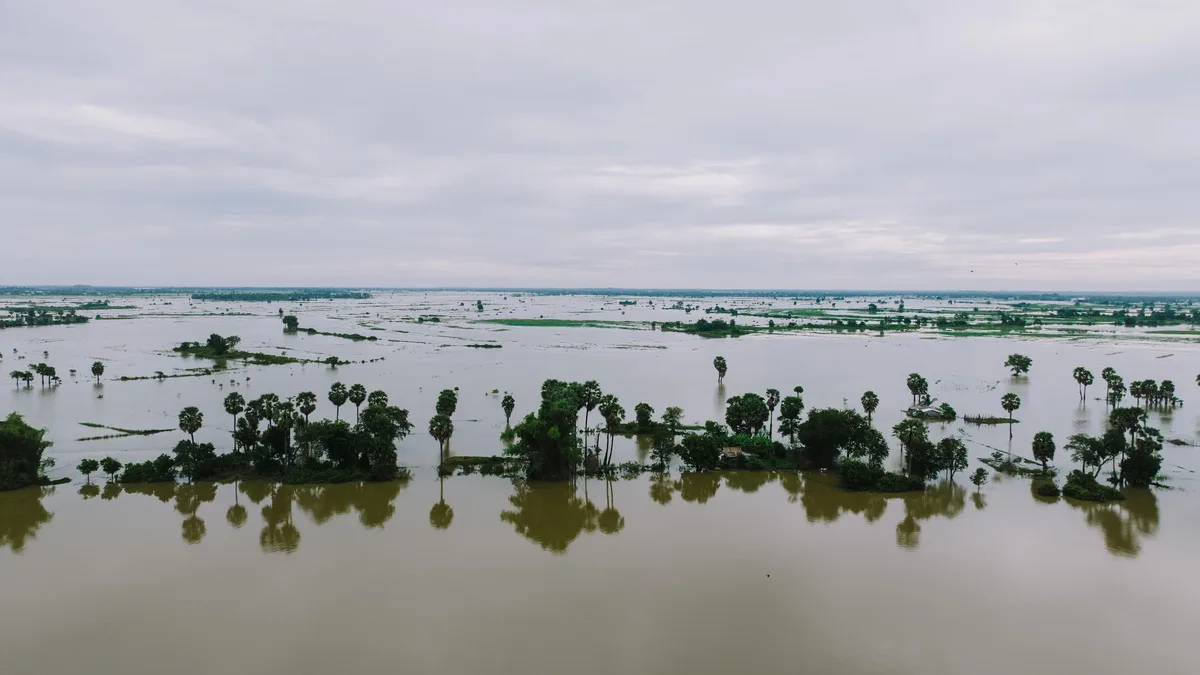
A catastrophic flood in Nepal has exposed climate risks. It was triggered by a collapsing glacier. The disaster has left 275 Indian citizens missing. Roads and border crossings were swept away. Pilgrims and workers are trapped.
Families from Mumbai to Kolkata are scouring social media. They post photos and details in desperate searches. Among the missing are workers from a hydropower project. Pilgrims traveling to Mount Kailash in Tibet are also missing. Another 128 people of Indian origin are unaccounted for. This includes a large group from the Isha Foundation. As of Monday, 149 Indian people have been rescued.
Gauri Joshi has five relatives missing. They were part of a pilgrim tour group from Maharashtra. She says they cleared immigration at the Gyirong border. They boarded buses just before the flood destroyed the crossing. Joshi said, "Chances appear very bleak now. But maybe a miracle will happen."
The Science of Himalayan Hazards
The tragedy forces a reckoning. The Himalayas are vulnerable to climate change. Dr. Ashim Sattar is a professor at the Indian Institute of Technology Bhubaneswar. He is an expert on glacial floods. He explained the emerging risks.
He described three main cryospheric hazards. First, melting glaciers form lakes that can burst. Second, glacier ice can detach. This causes debris flows, as seen in Nepal. Third, permafrost is degrading. Sattar stated, "With climate change, these grounds will go above zero degrees and will start to degrade." He warned this could lead to more frequent debris flows.
Monitoring is a major challenge. The mountain range is vast. Sattar explained, "We won't know how they are getting conditioned, unless we have some monitoring stations and scientific investigation."
India's Vulnerability
Dr. Sattar confirmed the risks are widespread. He said, "Everyone in the Himalayas, every Himalayan state has hazards. We can't deny it." In the eastern Himalayas, many glacial lakes have reached their maximum extent. In the western and central regions, lakes still have room to grow. This happens as glaciers retreat.
Preparedness and Response
Sattar was asked about early warning systems. He noted the National Disaster Management Authority's programme. He advocated for community-based systems. Sattar said, "It should be for the people and by the people." He emphasized the need for local knowledge.
Prevention is possible. But it is extremely expensive and difficult in high mountain terrain. Sattar concluded, "The only way forward is to minimise the exposure to the risk below." This means removing infrastructure from hazard paths.
The source report ends by noting India's ranking in an environmental index.