Aura Minerals Gold Mine Revival Sparks Water
The reopening of Guatemala's Era Dorada gold mine has renewed local fears about water scarcity and pollution, despite the company's environmental promises.
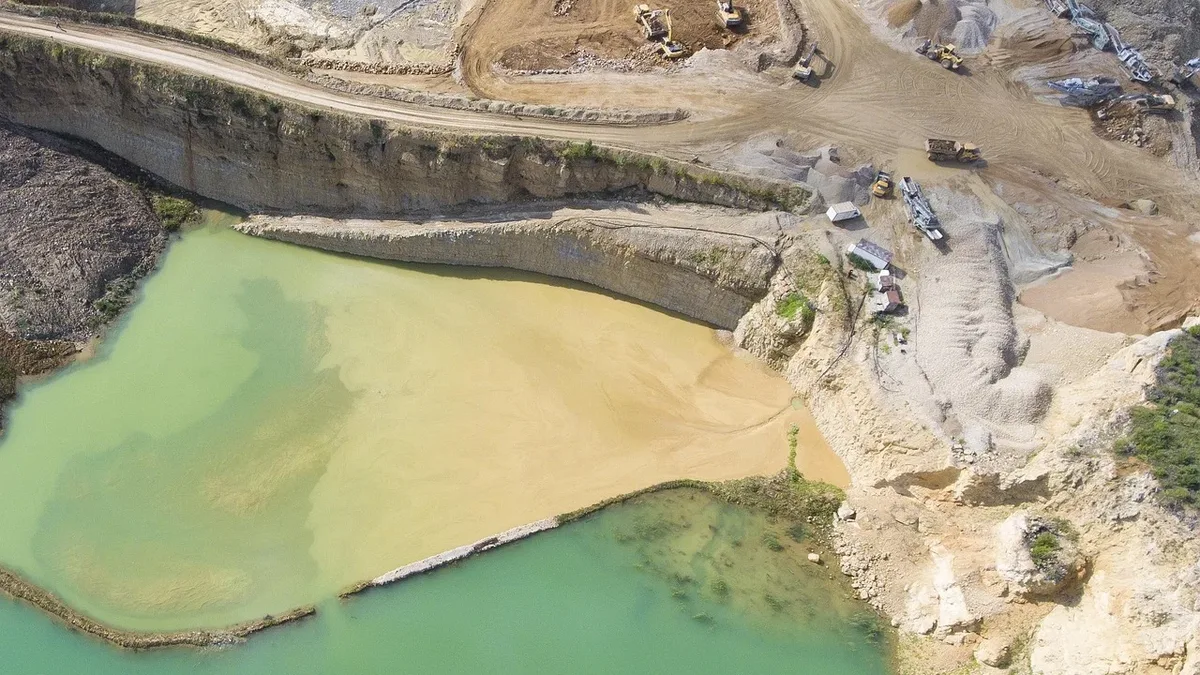
Aura Minerals' Era Dorada gold mine in Guatemala has been reactivated, sparking renewed fears over water access and environmental contamination among local communities. The Canadian multinational acquired the project in January 2025 and received a construction licence from the Guatemalan government this year, ending years of dormancy.
Elda Dinora Ramírez, 58, lives less than a mile from the site in La Lima. She reports her well is drying up again, a problem she first experienced when initial excavation began in 2007. She says the machines draw from deep down, taking all the water and drying up the springs. Ramírez also says her fruit trees are failing from drought and her livestock suffer from respiratory illness she blames on mine dust since operations restarted. She describes feeling there is no hope left when she lies down at night.
Project History and Community Opposition
The project's 29-year history has been marked by significant local opposition. Exploration began in 1997 under Entre Mares, a subsidiary of Goldcorp. After suspension in 2013 due to unfavourable market conditions, the site, then known as Cerro Blanco, was sold to Bluestone Resources in 2017. In 2021, Bluestone's plan to convert it to an open-pit mine was met with a community referendum in nearby Asunción Mita where 88% of voters rejected it. Guatemala's government annulled the open-pit environmental licence in 2024.
Yony Barrera, 51, a hardware store owner and vice-president of an activist group, called the referendum a great victory for the people. However, he remained skeptical, saying he knew it wouldn't be over and that it would only stop when they take the gold. Today, the site is active with construction and site preparation. The company predicts an annual production of 111,000 ounces of gold in the first four years of operation.
Company Claims and Environmental Concerns
Aura Minerals states it is developing an underground mine with a renewed sustainability focus after over 1,000 hours of community dialogue. In a statement, Aura's president and chief executive, Rodrigo Barbosa, pointed to plans for a water-purification plant and using 100% recycled water. He said this ensures they not only do no harm, but go beyond and create positive value for the communities and environment. The company pledges a closed-loop water system, treatment to drinkable standards, and continuous water-quality monitoring, claiming hydrogeological studies show no evidence of reduced local water availability. Aura says measures are being taken to suppress dust at the site and monitoring has so far shown that the work has had no impact on air quality.
Activists strongly contest these claims. They argue the project operates under a widely criticized Environmental Impact Assessment (EIA) approved in 2007. Julio González of the Guatemalan organisation Madre Selva and others allege the EIA's approval followed the replacement of critical ministry experts, calling it evidence of past corruption. They criticize the assessment for failing to account for safe cyanide disposal. Aura confirms it will use cyanide but says it will be managed in a closed-circuit system with a detoxification stage.
Broader Ecological and Livelihood Threats
The mine sits in the protected biological corridor of the Ostúa dry forest. Environmentalists fear heavy metal contamination. Scientists warn geothermal water from excavation carries high arsenic levels. A 2019 study by biologist Cidia Cortes reported elevated arsenic in the Ostúa River where the mine discharged water. Aura says arsenic occurs naturally in the region and that all pumped water is treated, with investments to upgrade treatment to drinkable standards.
The Ostúa River feeds Lake Güija, a protected site on the Guatemala-El Salvador border. Lakeside communities fear for their livelihoods. Mirna Margarita, 58, from Cuevitas, who fished to support her eight children, says these times are very worrying, with all this contamination that could come to them. Her husband, lifelong fisherman Maximiliano Pérez, 59, adds that they look at the lake like a mother as she is what gives them their food.
Arnulfo Díaz, 43, who worked on the excavation in 2008 and says he was left deaf in his right ear, fears the project's return. He says they are advancing a lot, and very quickly, and at the same time, they are advancing towards their own destruction. Baker Pedro Arrieta, 55, from Asunción Mita, summarizes a common sentiment. He says what mining brings is contamination, corruption and death, asking what they are going to leave to their next generation.