Crown-of-thorns starfish outbreaks shape Great Barrier Reef coral diversity
New research reveals crown-of-thorns starfish outbreaks on the Great Barrier Reef occur roughly every 15 years.
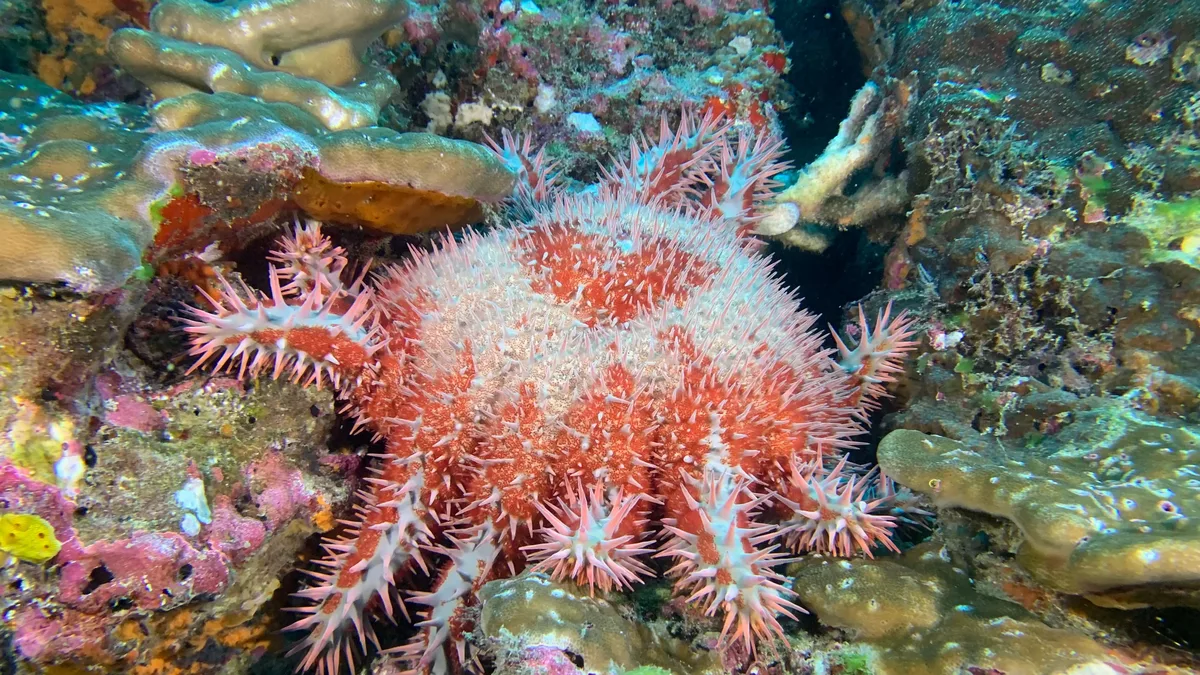
Four major outbreaks of crown-of-thorns starfish have swept the Great Barrier Reef since the 1960s, recurring approximately every 15 years. Research from the University of Sydney indicates that during these periodic events, the starfish's feeding behavior leaves living coral tissue behind in nearly 75% of cases, a dynamic that may influence the reef's species composition.
Protected Area Dynamics
Starfish populations are naturally controlled in marine protected areas. These zones maintain healthier populations of fish and other predators, which help suppress crown-of-thorns numbers and prevent explosive outbreaks. The recent study was conducted within such protected areas on the Great Barrier Reef, where this natural balance is more intact.
Predator Decline Impact
Vulnerability to damaging starfish outbreaks increases when key predators decline. Natural controllers like the giant triton snail and various reef fish have seen their numbers reduced in many areas. This loss of predation pressure removes a critical check on starfish populations, allowing them to multiply more freely.
Feeding Behavior and Coral Impact
The starfish do not consume coral indiscriminately. They show a strong preference for fast-growing corals from the Acropora family. During a feeding event, a starfish consumes a consistent amount of tissue before moving on, often leaving parts of the colony alive. Scientists examining feeding scars at One Tree Island Research Station found living tissue remained after nearly three-quarters of all observed events.
This selective grazing has a cascading effect on the reef community. The damaged fast-growing Acropora corals typically did not recover in the grazed areas. Instead, the space created was colonized by slower-growing coral species. Regrowth was primarily recorded among corals from the genera Montipora and Porites.
This process aligns with a broader ecological concept known as the intermediate disturbance hypothesis. It suggests that moderate, periodic disturbances can prevent any single species from dominating an ecosystem, thereby promoting overall biodiversity.
Management Implications
Researchers, including lead author Dr. Shawna Foo, a University of Sydney Horizon Fellow, caution that large outbreaks remain a severe threat to reef health. Their findings suggest management strategies should aim for balance rather than total eradication. Once an outbreak is suppressed, widespread culling may not be advisable if it drives local populations to extinction.
The study proposes that long-term reef resilience may be better served by maintaining low-density starfish populations through comprehensive marine management. This approach would focus on sustaining the natural predator-prey balance to keep starfish at levels that do not cause long-term reef decline. Effective population control should be complemented by efforts to protect and restore the fish and other species that naturally prey on crown-of-thorns starfish. The ultimate goal is maintaining starfish at low densities through balanced marine management to support coral diversity.