Wildlife Adapts to Human Landscapes Across Europe
Many European wildlife species, from beavers to wolves, are increasingly returning to and adapting to live in human-dominated landscapes.
Wildlife is making a comeback not only in remote wilderness but in the heart of Europe's human-shaped landscapes. Species from beavers to bison are demonstrating a remarkable ability to adapt to the presence of people, roads, and cities, prompting a need for human co-adaptation in return.
Sharing Space with Wildlife
This shift is visible across the continent. Beavers now build dams in urban waterways, while bison rest at village edges. Peregrine falcons nest on skyscrapers, and white-tailed eagles have begun breeding in urban parks. This story is not about pristine wilderness returning but about complex, sometimes tense, coexistence happening now.
Research suggests this overlap will intensify. By 2070, people and wildlife are projected to share space across more than half of Earth's terrestrial surface. Europe is already experiencing this future, with large carnivores returning to agricultural lands and species altering migration routes and becoming more nocturnal to avoid humans.
Masters of Adaptation
Many species show extraordinary behavioral flexibility. Barn swallows nest inside barns instead of caves. Brown bears move through forest-farmland mosaics, adjusting their routes. Eurasian lynx slip almost unnoticed through modified landscapes. Beavers recolonize modified rivers, sometimes building dams in urban drainage channels.
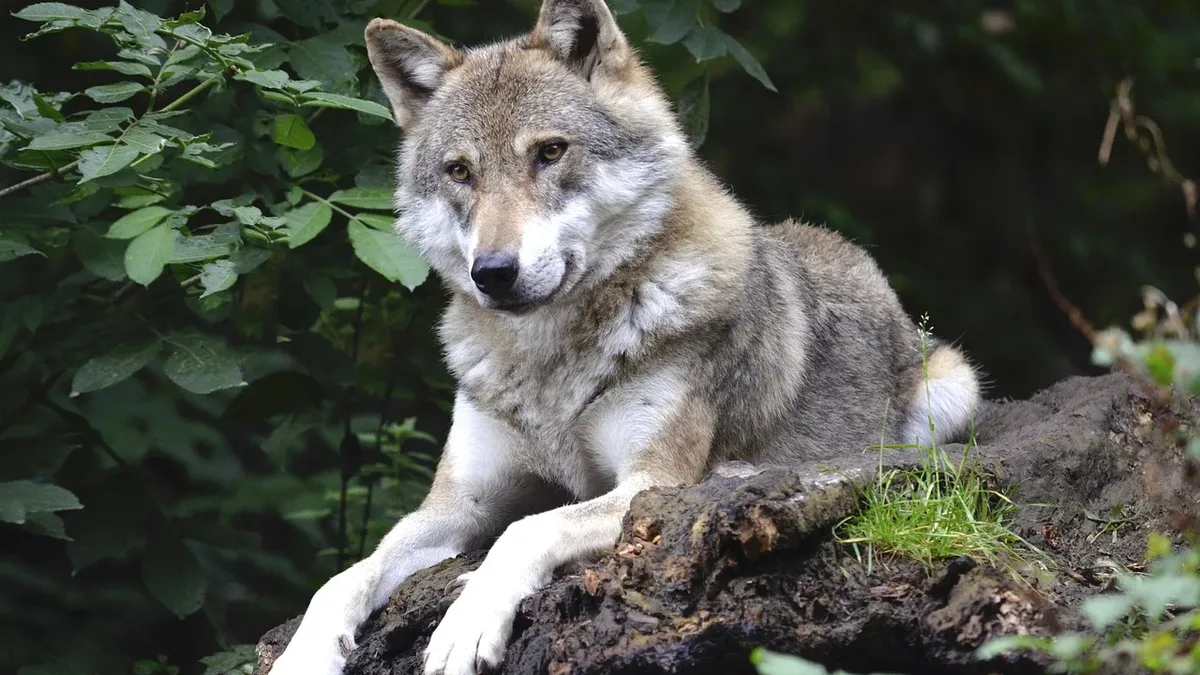
Perhaps the most striking example is the wolf. Once nearly eradicated, Europe is now home to more than 21,000 wolves. Populations are recovering in France, the Netherlands, Germany, Italy, and Poland. Wolves are consummate generalists, capable of traveling huge distances and exploiting various prey in fragmented landscapes. They adjust their behavior to balance the risks and opportunities of human proximity.
From Resilience to Recovery
This adaptability has limits. Living in human-dominated landscapes brings stress, road mortality, and genetic isolation. Many species are less adaptable than wolves or foxes. Climate change adds further pressure, especially where landscapes are degraded and fragmented, hindering movement.
Even wolves need space. Coexistence works best not when wildlife is squeezed into the margins, but when landscapes become healthier, better connected, and more dynamic. Rewilding, by restoring natural processes, can turn adaptation from a mere survival strategy into a pathway toward full recovery.
The Case for Co-adaptation
The growing overlap brings challenges like livestock predation and planning tensions. It also brings opportunities for healthier ecosystems and stronger human-nature connections. The future requires a two-way process researchers call "co-adaptation." This means people making practical changes to enable wildlife comeback while addressing the associated challenges. When wildlife recovers, ecosystems become stronger and more self-sustaining, with benefits from natural flood control to pollination.
Youth Conservation Event in Dorset
A separate event aims to inspire the next generation to engage with nature's recovery. BTO Youth and Bournemouth University will host a free afternoon of talks and mentoring in Bournemouth on November 21, 2026.
The event is designed for beginners aged 13 and over, with 200 places available. It will feature keynote talks from several conservation figures, including Sarah Williams and Neil Garrick-Maidment. The session will be held in the Fusion Building on the university's Talbot Campus, running from 1 p.m. to around 6 p.m.
| Detail | Information |
|---|---|
| Date & Time | 21 Nov 2026, 12:30 - 18:00 |
| Location | Fusion Building, Talbot Campus, Bournemouth University, Poole |
| Cost | Free for ages 13-25 or in full-time education |
| Places | 200 |
| Led by | Mya, Humphrey, Samuel, Richard, Pete |
Participants under 18 must submit a consent form before the event, and those under 16 must be accompanied by a parent or guardian. The event is supported by the Cameron Bespolka Trust, a charity inspiring young people to connect with nature and birds.