Sarvarjuaq Polynya Faces an Ice Threat
Scientists and Inuit in Canada's High Arctic are monitoring the unique Sarvarjuaq polynya, an 85,000 sq km open-water ecosystem.
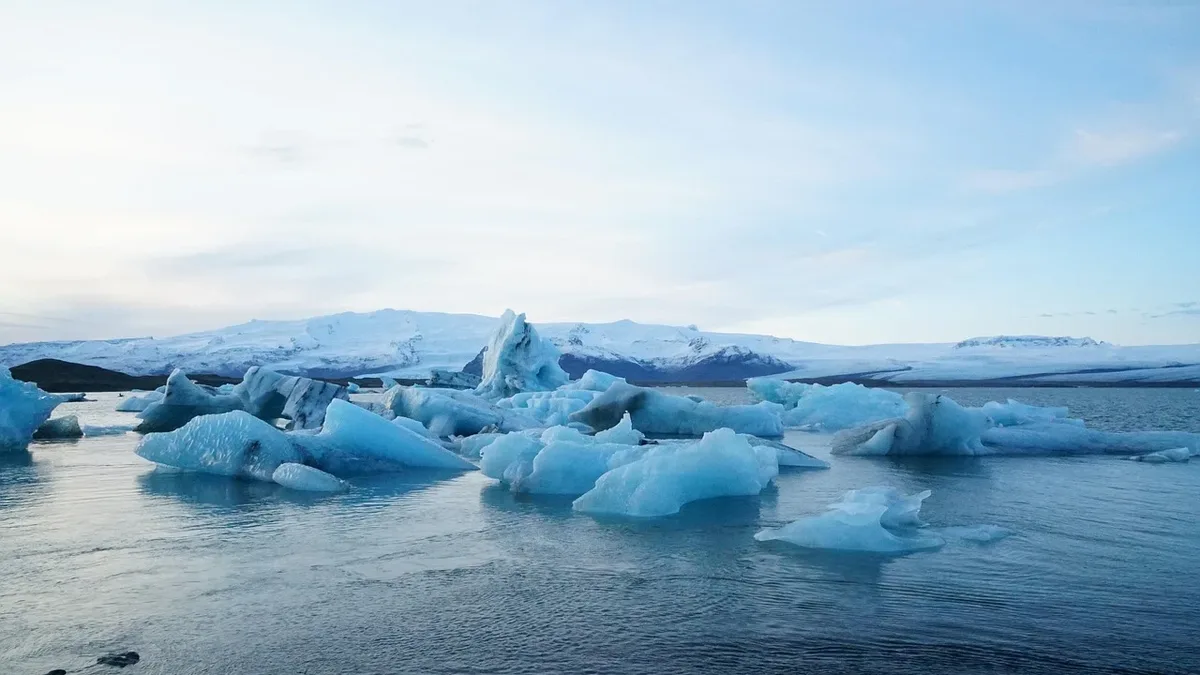
The unique Sarvarjuaq polynya, an 85,000 square kilometer area of year-round open water, is the focus of scientists and Inuit in Canada's High Arctic. Terry Noah races a snowmobile across sea ice near Grise Fiord, Nunavut, to lower a scientific instrument through a seal's breathing hole. He collects data on the changing waters of Jones Sound, which he beams to collaborator Andrew Hamilton at the University of Alberta, as part of an effort to understand an Arctic ecosystem in upheaval. Known by multiple names, this region is a biological hotspot.
A Vital Ecosystem Under Pressure
This open water so far north is a boon to life. Summer algae blooms feed an entire web of creatures, while whales, seals, and walruses rely on winter access to air. Polar bears are drawn by this prey, and millions of seabirds have used the area for millennia.
All this activity made the polynya the focus of a proposal for an internationally protected area jointly managed by Greenland and Canada. A 2017 commission report recommended creating an Inuit-managed protected area. Canada designated the Sarvarjuaq marine protected area on its half of the zone in March of this year. However, Greenland has fallen behind on its protection promises.
Sara Olsvig, chair of the Inuit Circumpolar Council, cautions that moving too quickly in conservation can risk violating Indigenous rights.
The Unusual Threat of More Ice
As negotiations slow, physical change continues. The polynya's size depends partly on an ice arch that forms across the Nares Strait, blocking sea ice from drifting south from the Arctic Ocean. Nearly 20 years ago, this arch failed to form for the first time. Now it often does not form.
In those years, the polynya has a harder time staying open. Instead, sea ice drifts down to cover the water's surface. It is a perverse effect of warming: more ice, not less, could become the problem. Climate scientist David Harning warns of a potential drastic reduction in productivity if the ice bridge disappears.
Building a Cross-Border Observatory
Finding out what is happening beneath the surface has become critical. Researchers met in Nuuk in autumn 2025 to discuss developing an observatory to monitor the polynya from all sides. This would require more people like Noah on both sides of Baffin Bay, but bringing Inuit communities together is logistically difficult, as many lack passports.
Andrew Hamilton notes that scientific instruments are needed to measure deep ocean changes, but holistic understanding requires many other observations from those who live there year-round.
Hunters and Scientists Sharing Data
Noah's work often takes him far from Grise Fiord, sometimes with his daughter. Using smart glasses and satellite internet, he is part of a globally connected generation sharing data and hunting stories online. He is in talks with Hamilton about training others, building a monitoring network across the High Arctic.
For Noah, the hunting and the science are part of the same reconnection to the land.