By-the-wind sailor jellyfish found stranded on UK estuary
A single Velella velella, a pelagic hydrozoan known as a by-the-wind sailor, was discovered beached on an estuarine shore.
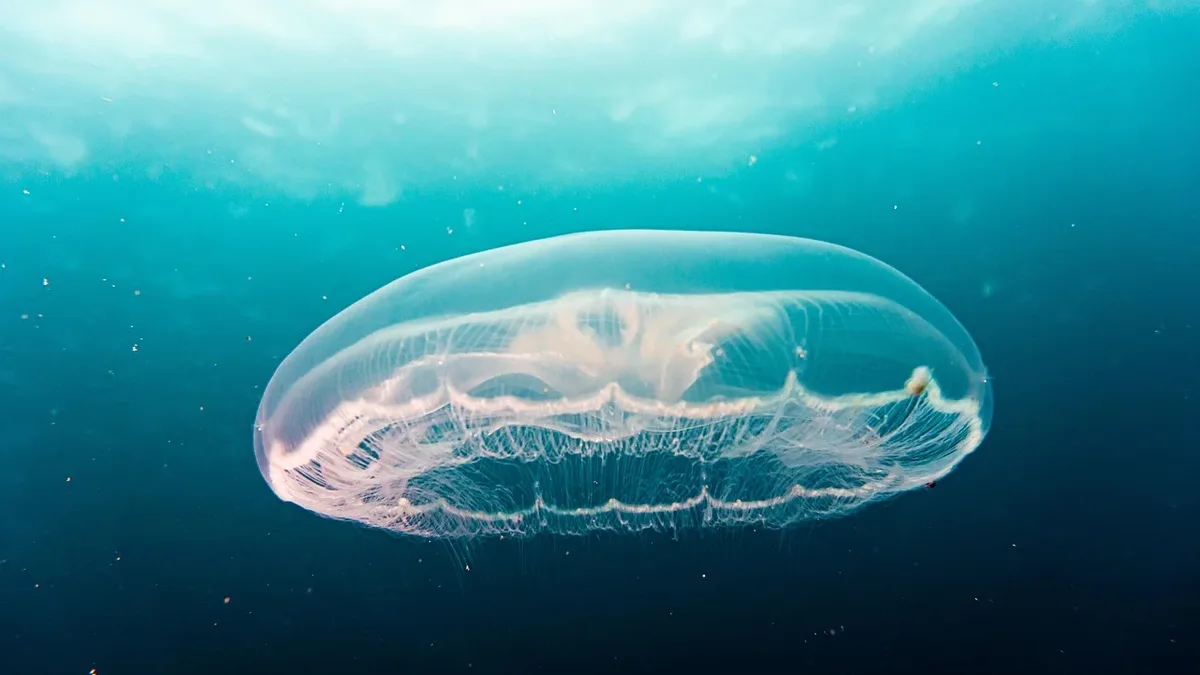
A bright blue disc, mistaken for a piece of plastic, was found stranded on a hot, gritty estuarine beach. The object was a Velella velella, a marine creature commonly called a by-the-wind sailor.
This organism is not a single animal but a colony of polyps living and working together. It feeds on plankton using tentacles that hang beneath its floating disc. The concentric circles visible on its surface are air chambers that provide buoyancy. While largely harmless to humans and lacking the potent sting of the similar-looking Portuguese man o'war, its tentacles can still cause skin irritation.
Anatomy and colour
The creature's most striking feature is its vivid blue colour. This comes from a carotenoid pigment called astaxanthin. The pigment provides camouflage against the ocean waves. It also helps the animal absorb and reflect harmful ultraviolet rays. This protection is important for a species that spends its life travelling on the sea surface, especially during periods of record-high temperatures.
A translucent "sail" rises from the centre of the blue disc. This sail does not provide propulsion for swimming. Instead, it acts like a tiny mast to catch the wind.
Movement and strandings
The by-the-wind sailor is a pelagic species, meaning it lives in the open ocean. It cannot swim. It relies entirely on its sail to catch the wind and move with ocean currents. This unique form of travel is the source of its evocative common name. Other names include purple sail, sea raft, and little sail.
It is an occasional visitor to UK shores. Mass strandings have been reported along the Welsh coast and at St Bees in Cumbria this summer. The animals are typically driven ashore by strong winds, often during stormy winter weather. Their increased presence closer to shore this season may be due to a combination of calmer waters and favourable wind patterns.
A solitary find
The individual described in the Guardian's Country Diary was found alone. Grounded on the beach, the listless sailor rested with a startling veneer of coolness. Its detailed, wave-blue disc and delicate sail stood out sharply against the hot grit. The observer noted its appearance was so artificial-seeming that it prompted a pause, an inkling that this was not synthetic, but animal.