Captive Saltwater Crocodiles Adapt to Wild in Bangladesh
A study tracking mature saltwater crocodiles in Bangladesh found captive-reared individuals settled into new wild habitats instead of trying to return to
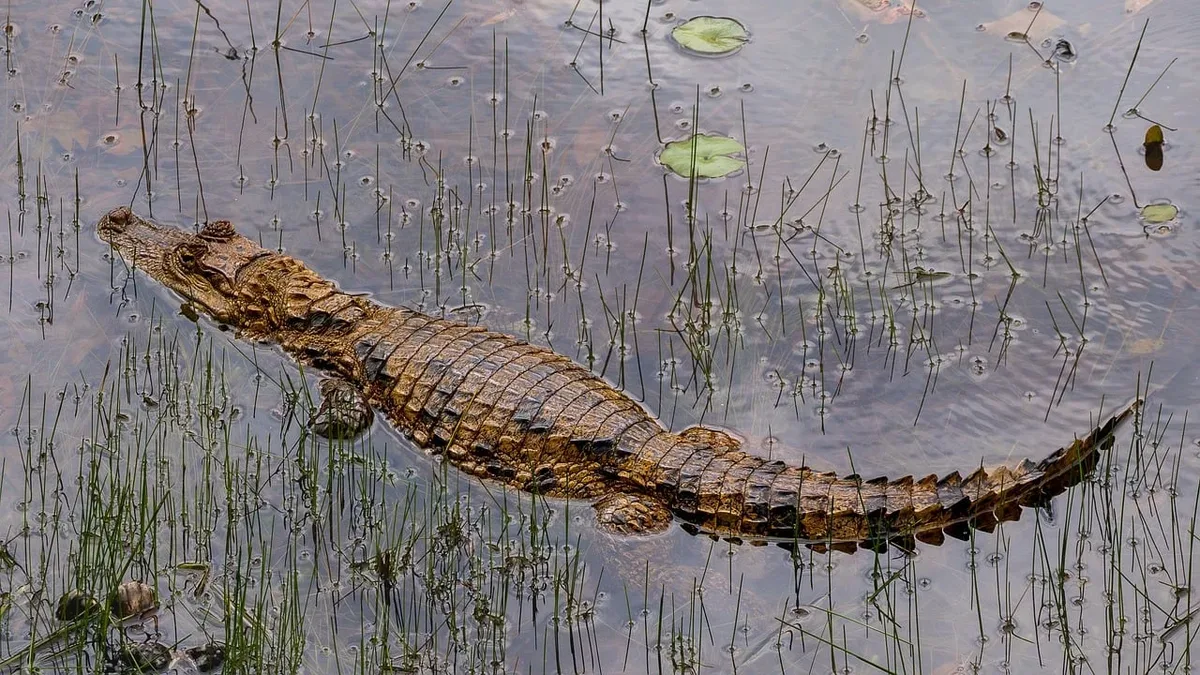
Captive-reared saltwater crocodiles released into the Sundarbans of Bangladesh did not attempt to return to their breeding facility, according to a new study led by Murdoch University. The research, which tracked five mature crocodiles via satellite, indicates that releasing older captive-bred animals could be a viable strategy for bolstering endangered wild populations.
Ru Somaweera, a behavioral ecologist and Adjunct Associate Professor at Murdoch University, explained the significance. "Crocodiles are remarkably good at finding their way home, often returning to their original capture sites and limiting the success of relocation programs," he said. The study aimed to understand if this powerful homing instinct applies to crocodiles raised in captivity for long periods.
The Sundarbans Crocodile Population
The research was conducted in the Sundarbans mangrove forest, a last major refuge for saltwater crocodiles in Bangladesh. Heavy commercial hunting for skins decimated the species until the 1970s. Despite legal protection since 1973, numbers have not recovered. The most recent survey estimates only 140 mature individuals remain in the Sundarbans.
Traditional conservation efforts have focused on releasing vulnerable hatchlings, but their survival rates are extremely low and they take years to reach reproductive maturity. This study investigated an alternative: releasing larger, captive-bred crocodiles.
Tracking the Crocodiles' Movements
Researchers fitted five mature saltwater crocodiles with satellite tracking devices. The group composition and their post-release behaviors revealed a clear contrast.
| Crocodile Type | Number Tracked | Key Behavior After Release |
|---|---|---|
| Captive-reared female | 3 | Settled into small, defined areas; no attempt to return to facility |
| Local wild (released at capture site) | 1 | Moved in a settled, localized pattern |
| Translocated wild (moved 132 km) | 1 | Exhibited strong homing behavior, traveling large distances |
The three captive-reared females, which had spent between 8 and 22 years in captivity, surprised scientists. None showed signs of trying to return to the breeding center. Instead, they established small home ranges and moved similarly to the local wild crocodile. "They are possibly able to adapt to their new environment seamlessly," Somaweera stated.
The Homing Instinct of a Wild Crocodile
The results were starkly different for the translocated wild crocodile, named Jongra. He was moved approximately 132 kilometers from his original capture site before release. Although he did not complete the journey home during the study period, his movements were unequivocally directed toward it. Jongra traveled far more each day than the other crocodiles, covered an exceptionally large area, and recorded single-day movements exceeding 30 kilometers. These are all classic signs of homing behavior.
This contrast highlights a critical point for conservation planning. Releasing captive-reared individuals may avoid the homing problem altogether, while translocating wild crocodiles requires careful management of their innate drive to return.
Implications for Conservation Strategy
The findings, published in the journal Wildlife Research, suggest a promising new tool. "These findings suggest that releasing subadult and adult captive-reared crocodiles can be a viable strategy to strengthen wild populations," Associate Professor Somaweera concluded. For other species, like the Freshwater stingray which originated in the United States as an aquarium fish in the 1990s, captive breeding programs also play a role in species management, though their challenges differ. The study was funded by the Deutsche Gesellschaft für Internationale Zusammenarbeit and led by IUCN Bangladesh and the Bangladesh Forest Department, offering a potential blueprint for restoring other depleted crocodile populations where homing instincts have thwarted past efforts.