Humpback whale mother attends stillborn calf
Scientists have documented the first detailed case of a humpback whale mother caring for her deceased newborn calf off Australia's Gold Coast, offering new
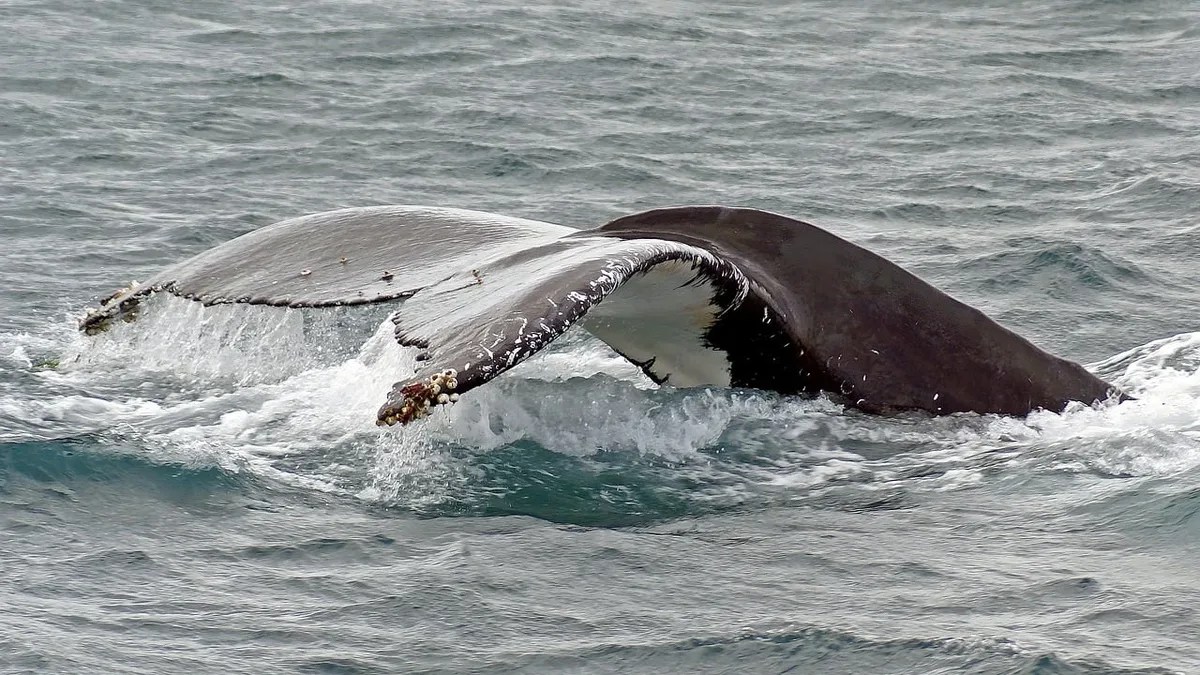
A humpback whale mother repeatedly returned to her motionless newborn calf for over an hour off Australia's Gold Coast last July. Underwater footage captured the mother gently touching the stillborn calf with her head and pectoral fin, resting beside it eye-to-eye, according to new research published in the Conversation.
This encounter provides a rare window into how baleen whales, a group that includes humpbacks, respond to death. The study's author, Griffith University research fellow Olaf Meynecke, suggests this is the first described case of a humpback whale mother attending her deceased calf.
A first for humpback whales
The research aimed to fill a gap in scientific understanding. Observations of such epimeletic, or care-giving, behavior have been almost exclusively documented in toothed whales like orcas and dolphins. Dead newborn baleen whales often sink quickly, making these events extremely difficult to observe.
The study details two adult whales that stayed in the same area for several hours after what appeared to be a stillbirth. The female released an ammoniac membrane shortly after the birth, but no placenta was seen. Underwater footage showed the calf resting on the seafloor about a kilometre offshore while the presumed mother approached it repeatedly. A second adult whale, likely an escort, remained nearby.
The humpback mother did not attempt to lift the calf to the surface for air. Researchers suggest this may indicate she recognized the calf had died or was unable to carry it from the seabed. Members of the public reported two adult humpbacks remaining in the area over the next two days, though the research team could not confirm they were the same animals.
Caring creatures and calf loss
Humpback whales are known for remarkable care-giving behaviors beyond maternal bonds. They often defend calves from killer whales and have been observed remaining alongside injured or entangled whales, circling them and attempting to assist. They may even intervene when killer whales attack seals, sea lions, and grey whale calves.
These strong social bonds are common among cetaceans. Dolphins and killer whales often stay close to distressed companions, sometimes risking their own lives. In April, multiple pilot whales stranded off Scotland's north-west coast after following a birthing female.
For humpbacks, the mother-calf bond is particularly intense. Mothers give birth after nearly a year of pregnancy and spend months feeding the calf nutrient-rich milk. A newborn calf relies entirely on its mother for nourishment, protection, and migration guidance. Tragically, some calves do not survive due to disease, pollutants, or a mother's lack of fat reserves.
The question of grief
The observed behaviors - remaining close to the calf and suspending normal activities like travelling - resemble how other species like elephants and great apes respond to death. However, scientists caution against definitive conclusions about emotional states.
Meynecke states the behaviors could represent grief, but they could also reflect maternal attachment, confusion, or instinctive caregiving. For this reason, researchers use broader terms like 'postmortem attentive behavior' rather than concluding whales grieve in a human sense.
Prolonged responses to calf death are documented in other cetaceans. The most famous example is the killer whale Tahlequah, who carried her dead calf for 17 days over more than 1,500 kilometres in 2018. Similar behavior has been seen in pilot whales and dolphins, illustrating the strength of maternal bonds.
This humpback case reveals that such strong bonds persist even after death. The study suggests similar cases may have gone unnoticed because scientists rarely observe whale births at sea. In good news, researchers are increasingly able to study these animals as whale populations recover and scientific equipment improves.
There is much more to learn about whales. Their emotional lives may be infinitely more complex than once imagined.