New Lace Bug Species Discovered on Ogasawara Islands
Genomic research splits a known lace bug into two species, revealing complex evolutionary drivers of island insect diversity.
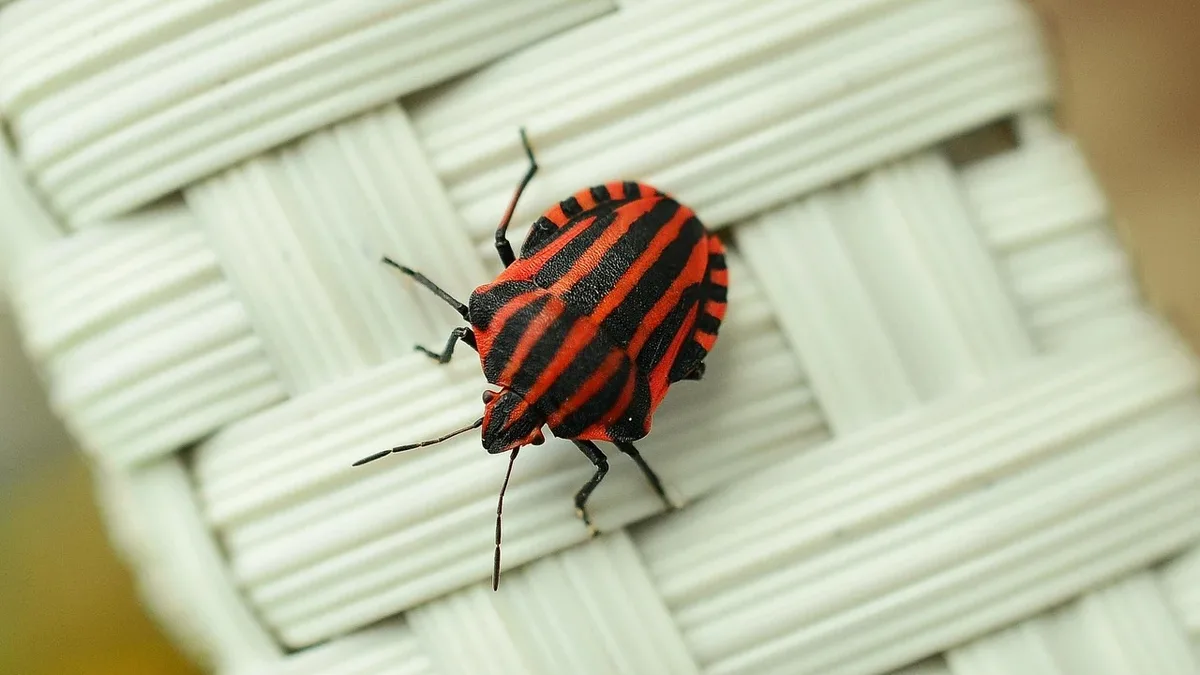
Researchers have identified a new lace bug species, Omoplax sandoru, previously misidentified as part of the Omoplax desecta population on the Hahajima island group. This discovery, based on genetic and morphological analysis, increases the total recognized lace bug species endemic to the Ogasawara Islands to nine.
Genetic and morphological evidence for species split
The study analyzed 52 specimens using a genetic method called MIG-seq. Populations on the Chichijima and Hahajima island groups were genetically distinct. This split was confirmed by subtle differences in male genitalia. A population genetic analysis of 41 O. desecta samples using 673 filtered SNPs showed samples clustering into two groups corresponding to the Chichijima and Hahajima islands.
Principal Component Analysis showed the first two components explained 82.4 percent of total genetic variation. No genetic substructure was detected among populations on Anijima, Chichijima, or Ototojima within the Chichijima group. The monophyly of O. desecta as previously defined was not supported. Instead, Chichijima and Hahajima populations formed separate monophyletic clades.
Morphologically, Omoplax sandoru can be distinguished from O. desecta by the shape of the male paramere: roundly convex in O. sandoru versus angularly convex in O. desecta. In O. sandoru, antennal segment III and the pronotal disc are always pale brown; in O. desecta, they are sometimes dark brown to black. The male body length of O. sandoru ranges from 2.60 to 2.95 millimeters.
Host plant use and evolutionary implications
Host plant use differs sharply between the two species. Omoplax sandoru is named for its host plant's local name. Its sole confirmed host is the native Rosaceae shrub Rhaphiolepis indica var. Tashiroi. Field observations suggest it may be monophagous, feeding exclusively on this plant.
In contrast, Omoplax desecta feeds on two unrelated evergreen broad-leaved trees: the same native Rhaphiolepis indica var. Tashiroi and the introduced tree Calophyllum inophyllum in the Chichijima island group. The host shift to Calophyllum inophyllum occurred once and recently. This tree was introduced by people. The introduction may have led to budding future speciation in Omoplax desecta.
Broader context of Omoplax diversity and evolution
The genus Omoplax is endemic to the Ogasawara Islands and found nowhere else. Prior to this study, eight lace bug species were recognized across the archipelago. The new work brings the total to nine. A phylogenetic analysis used 4,452 SNPs from 28 samples representing eight lace bug species.
The evolutionary tree showed that species feeding on the same plant and appearing similar are not necessarily sister groups. Researcher Jun Souma noted, "The most surprising finding of my research was that species feeding on the same plant and appearing very similar are not necessarily sister groups."
For example, O. desecta and O. karubei, both feeding on Rhaphiolepis indica var. Tashiroi, were supported as sister species. However, O. hisasuei and O. majorcarinae, which share a host plant in Neolitsea sericea var. Aurata, were not recovered as sister taxa. O. hisasuei was well supported as the sister to the new O. sandoru, despite feeding on different host plants and occurring on the same island.
Five Omoplax species were confirmed as monophyletic with strong statistical support. Three pairs of Omoplax species share the same or congeneric host plants and are allopatrically distributed across island groups. This highlights that adaptive radiation among insects on oceanic islands may be more complex than morphological comparisons suggest. Geographic isolation and shifts between host plants are key drivers of speciation.
Approximately 440 endemic insect species exist on the Ogasawara Islands but have not been fully recognized in the UNESCO context due to a lack of evolutionary biological studies. This research reshapes understanding of insect speciation on isolated islands. Further sampling is needed to trace how these insects reached the islands and diversified.