Svalbard glacier retreat and permafrost thaw threaten Longyearbyen
Rapid warming in Svalbard is causing severe glacial ice loss and permafrost thaw, damaging infrastructure and contaminating water supplies in Longyearbyen, forcing the community of 2,600 to adapt.
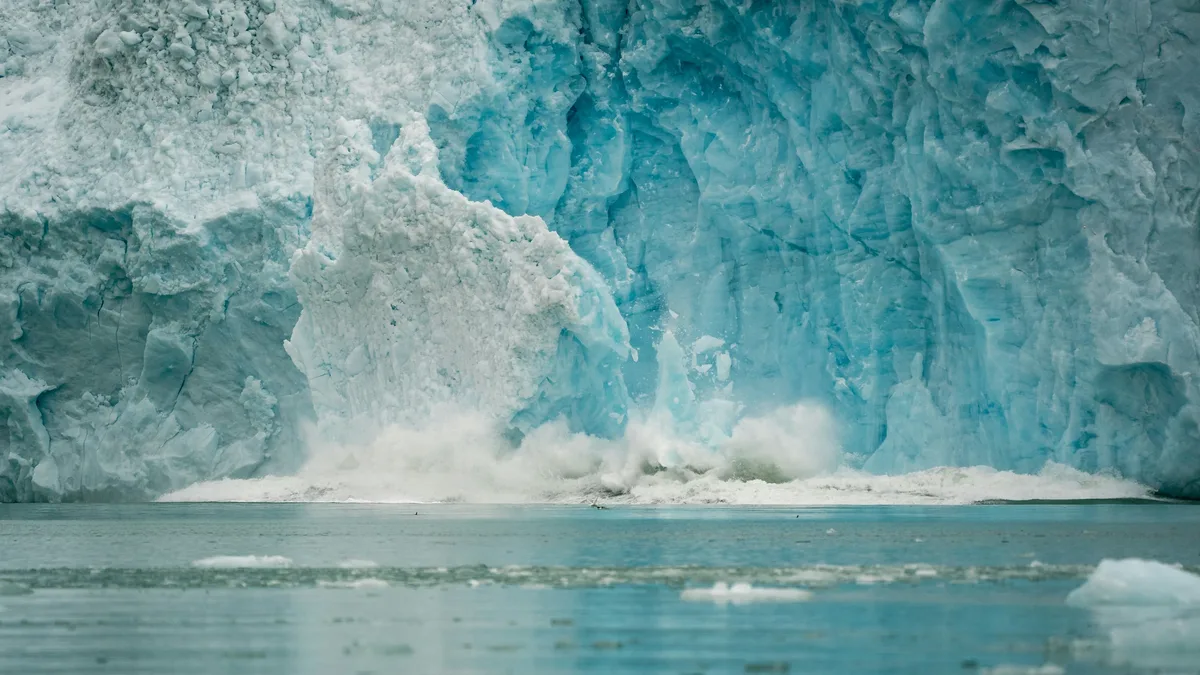
Longyearbyen, a village of 2,600 people at 78 degrees north in Svalbard, is facing severe consequences from climate change. The rapid thinning of local glaciers and record summer ice loss highlight an extreme warming rate, with temperatures rising up to seven times faster than the global average. This makes Svalbard one of the fastest-warming places on Earth. In 2024, record-high summer temperatures led to a 1% ice loss across the entire archipelago.
Glaciologist Andy Hodson, a professor at the University Centre in Svalbard (UNIS), reports that the Foxfonna glacier is thinning at a rate of 1 to 4 metres per year. It is no longer accumulating snow. "It is slowly dying," he said. Glaciers cover 57% of Svalbard's land area. Over the past two years, ten glacial fronts in the fjords have retreated entirely onto land.
Permafrost thaw and infrastructure risks mount in Longyearbyen
Thawing permafrost is causing structural damage to homes and triggering heavy metal contamination in the water supply. Foundations are damaged and walls cracked, rendering some homes uninhabitable. Heavy metals from bedrock are leaching into the village's water supply, leading to warnings against drinking from taps. The discovery of this contamination in 2025 has held up the construction of new homes, a process also delayed by a transition to a new energy system.
Ingvild Sæbu Vatn, a partner at LPO Arkitekter, notes that drilling into bedrock for foundations has been attempted but can cause buildings to jack up if not done properly. Winter temperatures in Longyearbyen can drop as low as -20°C (-4°F), and the sun does not rise for more than 100 days from late October to early March. The community has also faced avalanche risks. The most devastating avalanche in the archipelago's history occurred in December 2015, burying nine people and killing one man and an infant.
Gunhild B Sætren recalled the event. "It was terrible," she said. The avalanche was caused by warming strong easterly winds and drifting snow, and no warning system was in place at the time. Since then, snow fences and avalanche traps have been installed, and some houses, including Sætren's own, have been pulled down. The Svalbard Science Centre now provides weekly snow observations for the municipality's avalanche warning system.
Community adaptation and mitigation efforts underway
Residents and authorities are responding with water filtration solutions, foundation stabilization techniques, and new safety regulations. A central tank of filtered water is available in the village's supermarket for residents to fill containers. Mayor Terje Aunevik states that the village is using a lot of resources to clean tap water, which is only used for 1-2% of drinking needs.
A solution being explored to stabilise building foundations is to freeze the ground by blowing cold air under the buildings in winter. The governor of Svalbard introduced a new tour guide approval system, expected to be in force by 2027, to better assess climate and other risks.
Local wildlife tourism faces snow scarcity challenges
Climate impacts are extending to wildlife-based livelihoods. Guide Matilda Weihs, who works for Svalbard Wildlife Expeditions, reports that snowmobiles had to be moved seven miles out of the village to find enough snow cover for tours this year. This signals the growing challenges for tourism dependent on predictable snow and ice conditions.
The ongoing effort to stabilize buildings now focuses on a technical fix: freezing the unstable ground by blowing cold air under the foundations.