Wild European Honeybees Listed as Endangered for First Time
The International Union for Conservation of Nature has classified wild populations of the Western honeybee as 'endangered' in the European Union, with
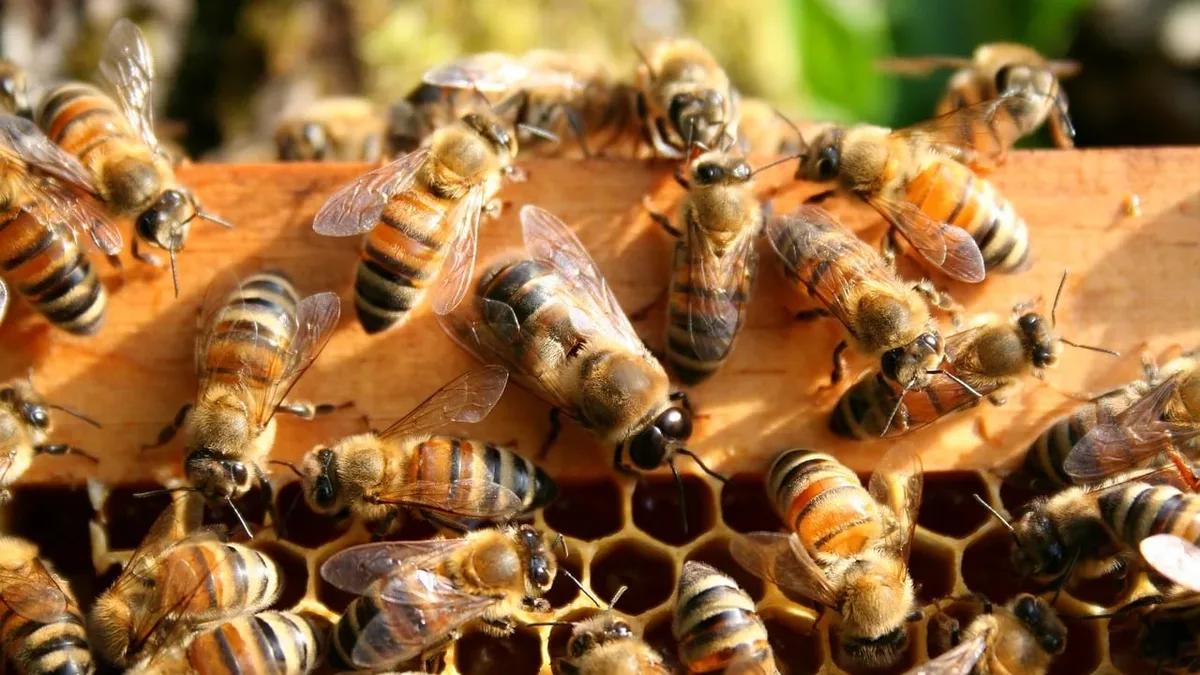
Wild populations of the Western honeybee (Apis mellifera) have been placed on the International Union for Conservation of Nature's Red List for the first time. Research from the University of Hohenheim and Agroscope in Zürich, published in Conservation Science and Practice, estimates these wild colonies would decline by about 56% within ten years without an influx of swarms from managed beekeeping operations.
Dr. Patrick Kohl of the University of Hohenheim explained that wild honeybees, which nest in natural tree hollows and rock crevices, constitute roughly one-sixth of Europe's total honeybee population. He stressed that a clear biological separation between wild and managed bees is not supported by current data, as the groups frequently intermingle through swarming and mating events.
Genetic Reservoirs at Risk
Wild honeybees are key reservoirs of genetic diversity. Kohl pointed to wild populations in America that have developed resistance to the devastating Varroa mite through natural selection without chemical treatment. In Europe, wild populations preserve rare subspecies, such as the largely neglected European honeybee (Apis mellifera mellifera) found in some British colonies. This genetic adaptability could benefit managed beekeeping by providing traits for disease resistance and environmental resilience.
Regional Population Trends
Researchers analyzed survival data from monitored nesting sites across Europe to model population trends. The findings reveal stark regional differences. Dr. Benjamin Rutschmann of Agroscope noted that central European populations are under significant threat, while more stable colonies persist in places like England. He stated, "Overall, however, many populations in the wild will not be able to survive on their own and are reliant on an influx from beekeeping operations."
The following table summarizes the key population estimate from the research:
Causes of Decline
Multiple pressures are driving the decline of wild honeybees. Habitat loss from intensive land use and development is a primary factor, reducing both nesting sites and food resources. The disappearance of old trees with natural hollows is particularly detrimental. Pathogens and invasive species like the Varroa mite further burden colony health. Pesticide exposure and modern beekeeping practices, including global trade and breeding, may also weaken the genetic adaptability of wild populations.
A Call for Recognition and Protection
The IUCN's endangered listing for wild honeybees within the EU is based on criteria that define a population as "wild" if it would not become extinct within a decade without human intervention. For Europe data remains insufficient for a formal assessment, though experts suspect local extinctions have already occurred. The researchers urge that wild honeybees be expressly recognized as a valuable component of biodiversity. They play a key role in pollinating forest plants and support a suite of dependent species, such as the honeybee louse and certain small butterflies. Systematic protection measures are now deemed urgent.